
Hear from Our Customers
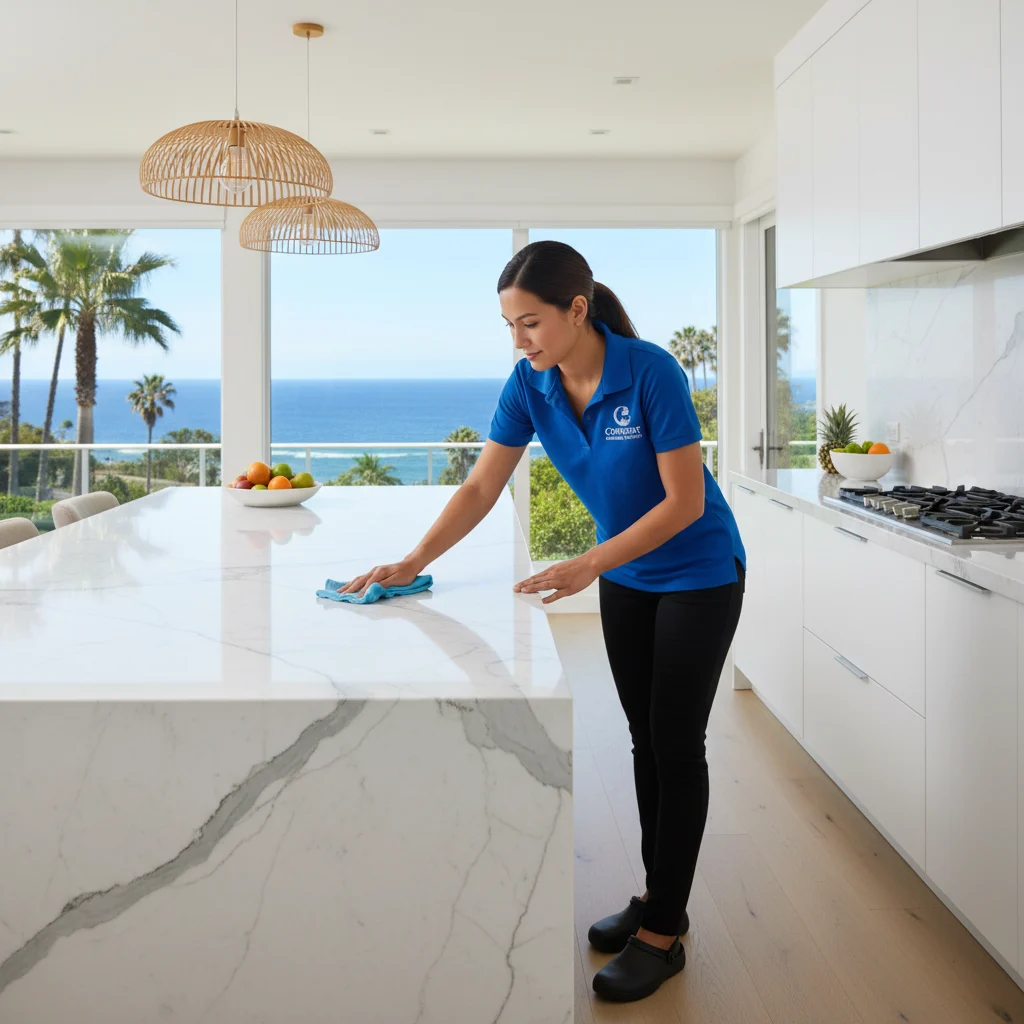
After a professional post renovation clean, you’re walking into a space that’s genuinely ready to live in. Countertops are clean without being scratched. New floors are clear of the fine silica particles that act like sandpaper if left behind. The air isn’t thick with particles that keep resettling every time someone walks through the room.
You can actually use the space — and enjoy what you built — instead of spending your first week in a dust mask. College Area’s housing stock also means your renovation likely happened inside walls built before modern construction standards. Older homes don’t ventilate the same way, and construction dust lingers longer in spaces with less airflow. Getting it out completely — not just visually clean, but actually clean — is the difference between a home that feels finished and one that still feels like a job site.
Comforts Cleaning Services is a locally owned, family-operated cleaning company serving San Diego County neighborhoods for over a decade. We’re based in San Diego County — not a franchise pulling from a national call center — and that accountability shows up every time we’re on a job.
We serve College Area and the surrounding Mid-City communities, including the established residential blocks of College East and neighborhoods adjacent to El Cajon Boulevard. We know this part of San Diego. We know the housing stock, the renovation patterns, and the kind of dust that comes out of a 1950s bungalow when the walls get opened up for the first time in sixty years.
We’re fully bonded and insured, and every cleaner on our team is vetted, trained, and shows up in uniform. That matters when someone is working inside a home you’ve just invested tens of thousands of dollars renovating. Our reviews consistently call out our responsiveness and reliability, and we take that seriously because we know your timeline doesn’t have room for a no-show.
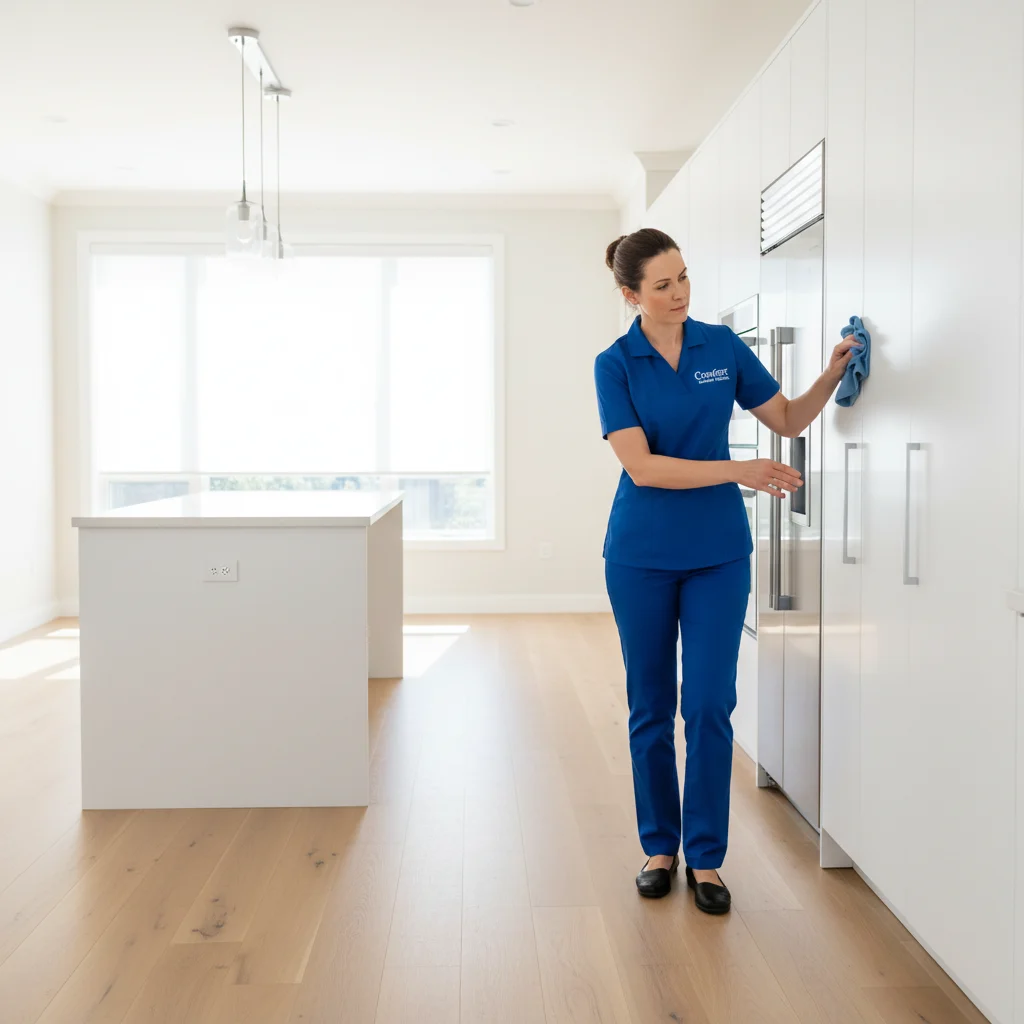
Post renovation cleaning isn’t a single pass through the house with a mop. It’s a structured, multi-phase process, and the order matters more than most people realize.
The first pass focuses on heavy work — removing bulk debris, surface dust, and the visible layer of construction residue from floors, walls, and fixtures. We address the construction dust that has settled on every horizontal surface, including the ones you can’t easily see: the tops of door frames, the insides of cabinets, and the tracks of windows. In College Area’s older homes, this phase often turns up more than expected because mid-century construction materials break down differently than modern drywall when disturbed.
The second pass is where detail work happens. Surfaces get wiped down with material-appropriate, non-toxic products — the kind that clean thoroughly without scratching new finishes or reacting with fresh paint. Fixtures, hardware, and appliances get attention. Baseboards, vents, and corners get addressed. We also look at HVAC vents, because construction dust pulled into the system will recirculate through the home for months if it’s not removed at the source.
The final pass is our quality check — a walk-through that catches anything missed and confirms the space is genuinely ready. If you’re a College Area landlord working against the SDSU fall semester leasing timeline, this is the step that gets your unit inspection-ready and rent-ready on schedule. If you’re a homeowner, it’s what lets you move back in without reservation.
Ready to get started?
Our post renovation cleaning covers all interior surfaces — floors, walls, countertops, cabinetry inside and out, fixtures, appliances, window sills and tracks, baseboards, and ceiling fixtures. Every surface that construction activity touched or that construction dust reached gets cleaned.
We use eco-friendly, non-toxic, biodegradable cleaning products on every job. In College Area, this matters for a specific reason: new construction materials — fresh paint, adhesives, sealants, new flooring — are still off-gassing as they cure. Adding harsh chemical cleaners on top of that creates a compounded air quality problem, especially in older homes where ventilation is less efficient. Our products clean thoroughly without adding chemical exposure on top of what’s already in the air during that curing period.
For College Area landlords completing an ADU — and with 21 ADU permits issued in 2025, there are many — our post construction cleaning service covers the full interior of the new unit, including any shared access areas affected by the build. We’re transparent about what’s not included: we don’t offer professional window cleaning or trash removal services. If those are part of your project scope, coordinate those separately. Everything else, we handle.
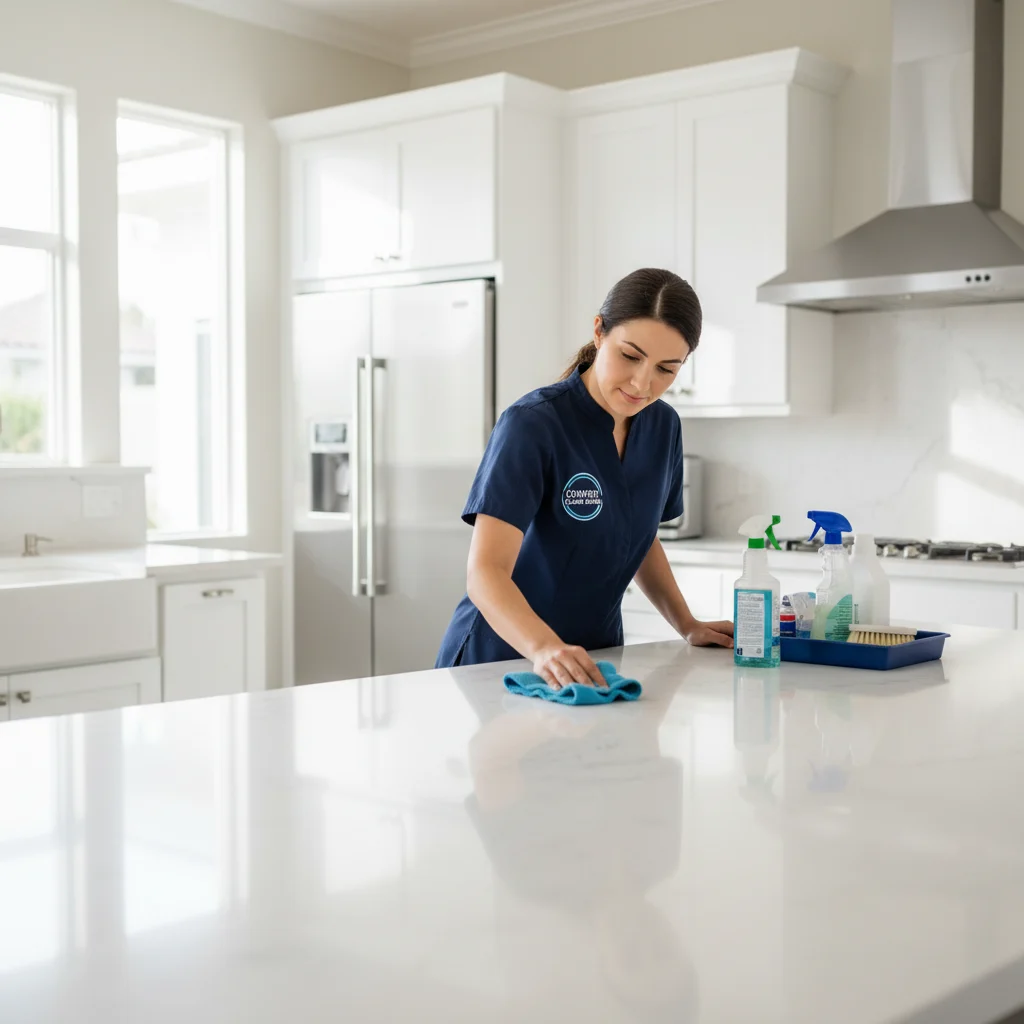
A standard deep clean is designed for a home that’s been lived in — built-up grease, soap scum, dust accumulation over time. Post renovation cleaning addresses a completely different set of materials. Construction dust contains fine silica particles from drywall, concrete, and tile cutting. These particles are electrostatically charged, which means they cling to surfaces and re-settle repeatedly rather than staying put after one wipe-down. Standard cleaning products and equipment aren’t designed to handle this, and a regular vacuum will actually recirculate fine construction dust back into the air rather than capturing it.
The scope is also different. Post renovation cleaning typically takes two to three times as long for the same square footage as a standard clean because every surface in the home has been affected, including areas that rarely get touched in routine cleaning: the insides of cabinets, HVAC vents, window tracks, and the tops of door frames. In College Area’s mid-century homes, where renovation often involves opening walls that haven’t been touched in decades, the dust profile is more complex than in a newer build, and the cleaning process needs to account for that.
Schedule it the day the contractor clears out — not after you’ve had a chance to look around and decide it’s not that bad. The longer you wait, the more fine construction dust works its way into surfaces, settles into HVAC vents, and gets tracked through the home. Construction dust doesn’t behave like regular household dust — it recirculates through the air and re-deposits on surfaces repeatedly, especially in a home where people are walking through and disturbing it.
In College Area specifically, timing also matters because of the neighborhood’s seasonal rental cycle. If you’re a landlord turning over a unit or finishing an ADU before the SDSU fall semester, your window for getting the space cleaned, inspected, and listed is narrow. Waiting even a week can push you out of the prime leasing window, and in a market where rents have climbed significantly over the past decade, a missed month of rental income costs far more than the cleaning itself.
It’s not overstated. Fine silica particles — which are present in drywall dust, concrete dust, and the dust produced by cutting tile — measure small enough to bypass the body’s natural respiratory defenses and lodge in the lungs. The EPA classifies fine crystalline silica as a serious health concern. For most healthy adults, short-term exposure during a renovation isn’t an emergency, but ongoing exposure after the work is done — living in a space that still has construction dust recirculating through the HVAC system — is a different situation.
For families with young children, pets, or anyone with asthma or respiratory conditions, the concern is more immediate. New construction materials also off-gas volatile organic compounds as they cure, which adds to the indoor air quality burden. In College Area’s older housing stock, there’s an additional consideration: homes built before 1978 may contain lead paint, and homes built before 1980 may have asbestos-containing materials in flooring adhesives or ceiling texture. If your renovation disturbed any of those materials, the dust profile is more serious than standard drywall dust, and professional removal — not DIY cleaning — is the appropriate response.
Not when it’s done correctly, and this is one of the most legitimate concerns people have. Construction dust — specifically the fine silica particles in drywall and concrete dust — acts like an abrasive on new hardwood, laminate, and tile. If you or anyone else walks across a dusty new floor before it’s properly cleaned, or uses the wrong vacuum or mop on it, you can cause micro-scratches that dull the finish permanently. The same applies to fresh paint: using the wrong cleaning product or too much moisture on newly painted trim or walls can lift the paint or leave streaks.
We use non-toxic, material-appropriate cleaning products and trained technique specifically to avoid this. We don’t use abrasive tools on new surfaces, and we don’t apply products that react with fresh finishes. This matters especially in College Area renovations where homeowners have invested in new hardwood floors, tile, or countertops in homes where the surrounding structure is older — the contrast between new finishes and older materials means the cleaning approach has to be precise. Being fully bonded and insured also means that if something does go wrong, you’re covered.
Yes, and this is a common question in College Area specifically. With the neighborhood leading San Diego in ADU permits in 2025 — 21 permits issued — there are many newly completed ADUs that need to be professionally cleaned before they can be legally occupied and rented. Whether you’ve converted a garage, built a detached backyard unit, or added an attached ADU to your existing home, our post-construction cleaning scope is the same: all interior surfaces, cabinetry, fixtures, floors, window tracks, vents, and baseboards.
One thing worth noting for ADU projects specifically: the construction process for a garage conversion or new detached unit often affects the surrounding property as well. Dust from the build migrates into the main house through shared walls, open doorways, and HVAC systems. If your ADU project impacted the main house — and most do to some degree — discuss the full scope when you book, so we can address both the new unit and any affected areas of the existing home. Getting it right the first time means your new unit is genuinely rent-ready, not just visually swept.
Almost always, yes — and this is one of the most common misconceptions about post renovation cleaning. Contractor cleanup is scoped around debris removal: hauling out lumber scraps, packaging, large waste, and doing a basic sweep or vacuum of the floors. That’s what their job covers, and most contractors do it reasonably well. What it doesn’t cover is the fine construction dust that has settled on every surface in the home — inside cabinets and drawers, on window sills and tracks, on top of door frames, inside light fixtures, and in the HVAC vents.
That fine dust is what professional post renovation cleaning addresses. It requires a different approach than a broom and a standard vacuum — because a standard vacuum recirculates fine particles back into the air rather than capturing them. In College Area, where many homes are mid-century construction and renovation activity is at a high point with the neighborhood’s ADU boom, the gap between contractor cleanup and a genuinely clean home is real and consistent. A contractor leaving a swept floor doesn’t mean the space is ready to move into. It means the obvious part is done — the detailed work is what comes next.
Other Services we provide in College Area