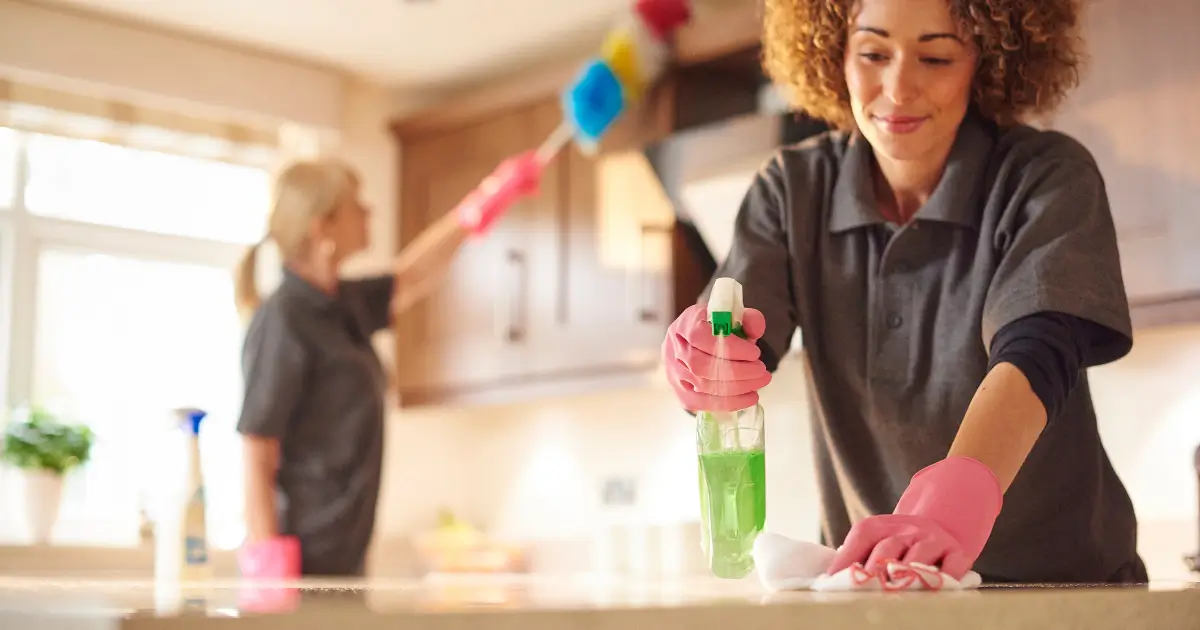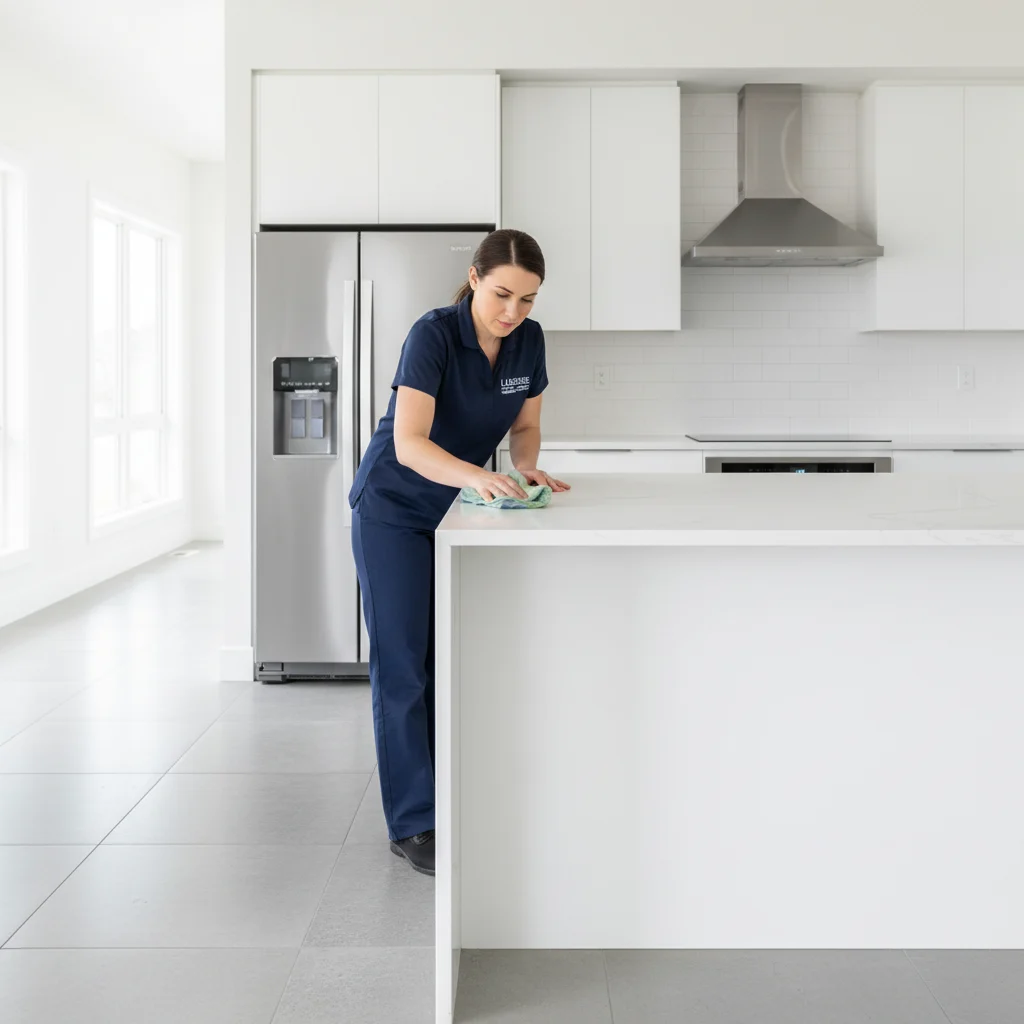

The contractor just wrapped up. The space looks close — but not quite. There’s a fine white film on every surface, construction debris in corners, adhesive residue on the windows, and drywall dust that somehow got into the bathroom you weren’t even renovating. You figure your regular cleaner can handle it, or maybe you’ll tackle it yourself over the weekend.
Here’s the thing: post-construction cleaning isn’t a more intense version of regular house cleaning. It’s a different process entirely — with different tools, a specific sequence, and real consequences if you get it wrong. This guide walks you through how it actually works.
Construction Clean Up: What the Phases Actually Look Like
Most professional construction cleaning services break the work into three distinct phases: rough, light, and final. Each phase has a different scope, happens at a different point in the project timeline, and requires different tools and techniques. Treating it as one big clean — or trying to combine all three into a single visit — is where things go wrong.
The reason sequence matters is simple. Fine construction dust, especially from drywall, doesn’t settle immediately. We recommend waiting 24 to 48 hours after the last trade finishes before beginning the final clean, so airborne particles have time to land. If you start too early, you’re cleaning surfaces that will be dusty again by morning.
What Happens During the Rough Clean Phase
The rough clean happens first — typically before the final fixtures, trim, and finishes are fully installed. At this stage, the job is about getting the space safe and workable, not move-in ready. That means removing large debris, sweeping up construction materials, clearing out leftover packaging, and doing a first pass on the major surfaces.
This phase is often handled by the construction crew themselves, but that doesn’t mean it’s done thoroughly. Construction workers are tradespeople, not cleaners. Their version of “cleaned up” usually means the space is safe to walk through — not that it’s been properly prepped for the next phase of cleaning. When we handle the rough clean, we establish a baseline before the detail work begins.
It’s also worth noting what the rough clean doesn’t include. Fine dust removal, window cleaning, fixture polishing, and interior cabinet wiping all come later. Trying to do those tasks before the heavy debris is gone just creates more work and risks cross-contaminating clean surfaces with construction residue.
For larger commercial projects — a new office buildout in Mission Valley or a retail space in Carlsbad — the rough clean might span multiple visits as different sections of the project are completed. We coordinate around the remaining trades rather than waiting for everything to be fully done.
One thing that catches a lot of homeowners off guard at this stage: the volume of dust. A single bathroom renovation can coat an entire floor of a house in fine particulate. It gets into HVAC vents, settles on shelving inside closed cabinets, and reappears on surfaces you already wiped down. Standard shop vacuums recirculate fine particles back into the air. Professional-grade HEPA-filtered vacuums capture particles down to 0.3 microns — which is what you actually need to pull drywall dust and silica-containing debris out of a space properly.
The Light and Final Clean: Where the Detail Work Happens
After the rough phase and after enough time has passed for airborne dust to settle, the light clean begins. This is the most time-intensive phase — often two to three times longer than the rough clean — and it’s where the real detail work happens. Surfaces get wiped down properly, windows are cleaned, fixtures are polished, HVAC vents are addressed, and the interior of cabinets and drawers gets attention for the first time.
The light clean is also where surface-specific technique matters most. New hardwood floors, fresh grout, quartz countertops, and specialty glass all respond differently to cleaning products and tools. Using the wrong product on unsealed grout can stain it. The wrong approach on new glass can etch it. A scrubbing pad that’s too abrasive on fresh hardwood can leave scratches that weren’t there when the contractor left. This is the phase that separates a cleaning crew with construction experience from one that mostly handles residential maid service.
The final clean is the last pass before the space is handed over or occupied. It’s less about deep cleaning and more about touch-ups — catching anything the light clean missed, doing a final wipe of high-touch surfaces, mopping floors, and making sure the space is genuinely move-in ready rather than just visually close. We include a supervisor walkthrough to verify the work before our crew leaves.
That last part is worth emphasizing. Having a supervisor check the space during and after the clean — not just sending a crew and assuming everything went well — is what gives property owners and general contractors actual confidence in the outcome. It’s a standard that not every cleaning company holds itself to, but it’s the right way to do it.
For homeowners in San Diego County who just finished a renovation in neighborhoods like North Park, Hillcrest, or Lemon Grove, this final phase is often what determines whether the space feels genuinely finished or still somehow incomplete. The difference between a space that looks clean and one that actually is clean is usually found in the details of this last phase.
Post Renovation Cleaning: What Homeowners Often Get Wrong
Renovation projects — kitchen remodels, bathroom upgrades, room additions, ADU builds — are booming across San Diego County right now. The county authorized more than 11,500 new private housing structures in 2024 alone, and ADU construction is accelerating following recent state legislation that now allows accessory dwelling units to be sold independently as condominiums. That’s a lot of newly finished spaces that need proper cleanup before anyone moves in.
What most homeowners get wrong is assuming their regular house cleaner can handle it, or that they can do it themselves with a shop vac and some all-purpose spray. Both approaches tend to produce the same result: a space that looks clean on the surface but still has construction dust in the vents, residue on the windows, and a fine grit underfoot that doesn’t fully go away.
Why Post-Construction Cleaning Is Different From a Deep Clean
A standard deep clean — even a thorough one — is designed for an occupied space with existing surfaces and furniture. Post-renovation cleaning is designed for a space that’s just been through construction. The conditions are fundamentally different, and the approach has to match.
The dust profile alone is different. Drywall dust is extremely fine and alkaline. It doesn’t behave like everyday household dust, and it doesn’t respond well to the same products. Silica-containing construction debris can be a respiratory concern if it’s not captured properly rather than just moved around. Adhesive residue from flooring or tile installation requires specific solvents. Paint overspray on glass needs a non-scratch scraping technique before any cleaning product touches it. None of this is standard deep-cleaning territory.
There’s also the surface vulnerability factor. Brand-new surfaces are, in some ways, more fragile than older ones. Fresh grout hasn’t fully cured. New hardwood floors may have a finish that’s still sensitive. Newly installed fixtures can scratch if you’re not using the right tools. A cleaning crew that’s used to working in lived-in homes — where the surfaces are already broken in — needs to adjust their approach significantly for a post-construction environment.
The other thing homeowners often underestimate is scope. A kitchen remodel doesn’t just affect the kitchen. Dust travels. It ends up in bedrooms, in closets, in bathrooms on the other side of the house. A proper post-renovation clean accounts for the whole affected area, not just the room where the work happened. If the cleaning scope doesn’t reflect that reality, you’ll still be finding construction dust weeks after the crew leaves.
For San Diego County homeowners who’ve recently completed projects in areas like La Mesa, National City, or Clairemont, this is especially relevant — older homes in these neighborhoods often have HVAC systems and layouts that spread construction dust more broadly than newer construction, which means the cleaning scope needs to be larger than it might seem at first.
Commercial Cleaning Contracts After a Construction Clean
Yes — and it’s something worth thinking about before you book a one-time post-construction clean. For business owners, property managers, and commercial developers in San Diego County, the post-construction clean is often the starting point for an ongoing cleaning relationship rather than a standalone job.
This makes practical sense. A cleaning crew that does your post-construction clean already knows the space — its layout, its surface types, its quirks. We’ve done the hardest part. Transitioning to a recurring commercial cleaning contract after that first clean is straightforward, and it typically comes with a better rate than one-off service. Recurring commercial clients can access discounted hourly rates, and scheduling can be built around your business hours — including after-hours cleaning if the space is occupied during the day.
The economics are worth considering. A new office buildout in Mission Valley or a retail space in Encinitas represents a significant investment. The post-construction clean protects that investment by making sure the space is properly handed over. Keeping it clean on an ongoing basis protects it further — and having the same trusted crew handle both means you’re not starting over with a new company every few months.
For general contractors and developers, this is also relevant from a client relationship standpoint. Being able to hand off a newly completed space with a cleaning crew already lined up for ongoing maintenance is a value-add that not every GC thinks to offer. It’s a small thing that makes the handover feel complete.
We offer recurring commercial cleaning at rates starting at $50 per hour for monthly service, with further discounts for weekly or bi-weekly schedules. All commercial work is covered under our bonding and insurance — and for clients who need it, we can provide a Certificate of Insurance before the first visit. If you’re managing a commercial project anywhere across San Diego County, that’s worth knowing upfront.
Finding the Right Construction Cleaning Service in San Diego County
Post-construction cleaning done right isn’t complicated — but it does require the right sequence, the right equipment, and a crew that understands what new surfaces actually need. Skipping phases, rushing the timeline, or handing it off to a crew without construction-specific experience are the things that lead to scratched floors, dusty vents, and a space that never quite feels finished.
San Diego County’s construction market is as active as it’s been in years. More projects mean more handovers, more move-in deadlines, and more homeowners and contractors looking for a cleaning crew they can actually count on.
If you’re approaching the end of a build or renovation and need a team that can work around your timeline — with supervisor oversight, eco-friendly products that are safe for new surfaces, and a 24-hour satisfaction guarantee — Comforts Cleaning Services is ready to help. Reach out to get a quote and find out how quickly we can get on-site.