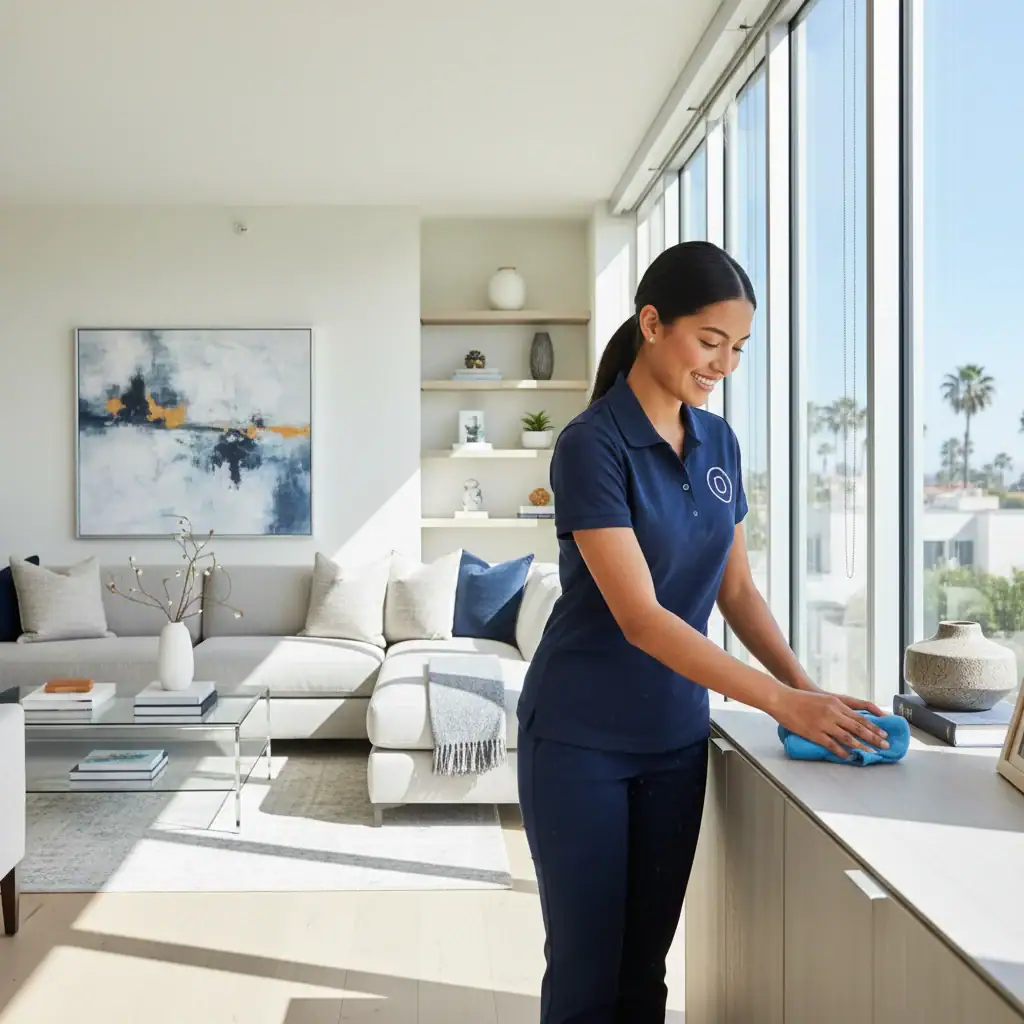

The renovation is finally done. The countertops are in, the floors look incredible, and you are ready to get your life back. Then you walk through the space and realize it is covered in a fine, stubborn layer of dust resting on everything—inside the cabinets, along the baseboards, and on the brand-new fixtures. Your contractor did a sweep before leaving, but this is far from clean.
That gap between construction ending and the space becoming livable is exactly what post-renovation cleaning is designed to close. Here is what it involves, why skipping it is impossible, and what makes it different from a regular deep clean.
What Post-Renovation Cleaning Covers
Post-renovation cleaning is a specialized service addressing what remains after construction work, targeting not just visible debris, but the fine dust, residue, and particles settling into every corner of a space. It differs completely from a standard deep clean and goes far beyond the cleanup your contractor performed before packing up tools.
A proper post-renovation clean covers all interior surfaces, including countertops, cabinetry inside and out, appliances, fixtures, sinks, tubs, window sills, baseboards, and floors. We also address HVAC vents and returns, where construction dust accumulates and circulates continuously through the home if neglected. The goal is a space genuinely ready for living, rather than one merely appearing finished at first glance.
Why Your Contractor’s Cleanup Is Not Enough
This misconception is the most common one we encounter. Homeowners assume that because a contractor swept up and hauled away debris, the space is clean. Contractors remove construction waste, leftover materials, large debris, and the obvious mess at the end of a job. That is their responsibility, and most execute it well. However, deep cleaning a newly remodeled space requires an entirely different scope of work.
What remains behind is a tougher challenge. Drywall dust is extraordinarily fine, with particles measuring as small as 2.5 microns, allowing them to stay suspended in the air for days or weeks after work ends. Standard household vacuums fail to capture these particles, merely recirculating them instead. If you attempted to clean a post-renovation space yourself and felt like you were just moving dust around, that is precisely what happened.
The health dimension is equally critical. Drywall dust contains crystalline silica, classified as a respiratory hazard by OSHA, which sets a permissible exposure limit of 50 micrograms per cubic meter of air for workers. Your family, moving back into a freshly renovated space without protection, steps right into that environment. Wood dust carries distinct risks, as the National Toxicology Program classifies it as a known human carcinogen linked to nasal and sinus cancers.
Beyond dust, adhesive residue from protective films on new fixtures, paint overspray on hardware and trim, and construction grit embedded in grout lines all require attention. Removing them demands proper equipment, specialized products, and a cleaning sequence working from the top of the room downward, since dust resettles multiple times during the process, making a single pass ineffective.
How The Post-Renovation Cleaning Process Works
Professional post-renovation cleaning follows a strict sequence where the order of operations matters significantly. We begin at the top with ceiling fans, light fixtures, and vents, then work downward to the floors. Vacuuming floors first and wiping down shelving afterward simply deposits dust back onto the freshly cleaned floor.
Equipment choice is equally vital. HEPA-filtered vacuums capture 99.97 percent of particles as small as 0.3 microns, representing the professional standard for construction dust removal. Regular shop vacuums or household cleaners fall far short. OSHA restricts dry sweeping for silica-containing dust when safer methods exist, establishing wet methods and HEPA filtration as the baseline for post-renovation cleaning.
A single-room remodel typically requires three to five hours of cleaning. A whole-home renovation demands a full crew working eight to twelve hours across one or two days, depending on scope and dust volume. The timeline also hinges on how long ago the work finished, as dust settling longer into surfaces and HVAC systems requires additional passes to fully resolve.
Following completion, we provide a documented walkthrough offering a clear record of covered areas. This simple accountability step proves especially valuable when managing rental properties or working alongside a general contractor.
Post-Renovation Cleaning In San Diego County: Why Local Conditions Matter
Post-renovation cleaning in San Diego County differs from other markets due to regional climate and housing stock creating specific challenges that inexperienced companies overlook, leaving homeowners with incomplete results.
San Diego County issued over 13,200 home remodeling permits in 2024, led by kitchen remodels, bathroom renovations, and ADU conversions. That high volume of freshly renovated spaces shares a common post-construction cleaning challenge shaped by local geography.
Coastal Humidity And Construction Dust
In coastal neighborhoods like Pacific Beach, Ocean Beach, La Jolla, Coronado, Encinitas, and Carlsbad, the marine layer brings persistent humidity, particularly from spring through early summer. When construction dust settles in a humid climate, it clings tenaciously to surfaces, bonds with new paint and grout, and creates conditions where mold can take root in newly opened walls or freshly installed bathrooms before occupancy begins.
Salt aerosols from the marine layer, primarily sodium chloride and magnesium chloride, deposit on porous surfaces and bond ionically to paint and grout. This compounds the existing construction dust issue. A cleaning method suited for a dry inland environment falls short for a freshly renovated bathroom blocks from the ocean in Pacific Beach.
We utilize non-toxic, biodegradable products safe for new countertops, fresh paint, and recently installed fixtures. This prevents chemical residue for returning children and pets while avoiding added VOC exposure from adhesives, sealants, and paint.
For homeowners in older coastal neighborhoods like Mission Hills, Hillcrest, or Kensington, where housing stock largely predates 1978, renovations can disturb lead-containing materials, requiring careful sensitivity in managing post-construction cleanup, a factor we account for from the start.
ADU Conversions And Inland Dust In East County
Inland San Diego County presents distinct post-renovation cleaning hurdles. Communities such as Santee, El Cajon, Lakeside, and Rancho San Diego experience Santa Ana winds, which bring dry, particle-laden air from the inland desert, typically from October through February. Homes undergoing or finishing renovations during this window face additional fine particulate pushed through construction gaps onto every surface, worsening dust accumulation and requiring extra cleaning passes.
ADU conversions require specific attention. San Diego County issued nearly 4,000 ADU permits in 2024, up from around 1,150 in 2020, marking a 247 percent increase in four years. Mostly garage-to-living-space conversions, these projects generate a unique mix of debris: concrete dust from slab work, drywall dust from new framing, adhesive residue from flooring installation, and overall grit from transforming storage into living space. Because these areas are compact, dust concentration per square foot runs high, and tight timelines accompany their preparation for immediate occupancy or rental.
Whenever you finish an ADU backyard build in Chula Vista or wrap up a kitchen remodel in Rancho Bernardo, the principle remains constant: construction ending does not mean a space is ready for living. The cleaning phase stands as a distinct step where skipping or rushing brings real consequences for air quality, new finishes, and incoming resident health.
Hiring A Post-Renovation Cleaning Service In San Diego County
When vetting companies for this work, specific criteria deserve attention. Confirm whether they use HEPA-filtered equipment rather than standard vacuums. Verify full insurance coverage, including workers’ compensation, to protect against liability on your homeowner’s policy if a worker is injured. Inquire about the exact scope of inclusions and exclusions. A company providing clear answers demonstrates relevant experience.
Renovations represent major financial investments. In San Diego County, where median home values approach $1 million, protecting new finishes with appropriate cleaning products and techniques is essential. We use products safe for new countertops, fresh paint, and new flooring, following a precise sequence and documenting all completed tasks.
If you have recently finished a renovation in San Diego County or expect one to wrap up soon, Comforts Cleaning Services is ready to assist. Reach out by phone or text to secure scheduling typically within a week.
Ready to Enjoy Your Remodeled Space?
Contact Comforts Cleaning Services today at (555) 123-4567 or visit our website to schedule your professional post-renovation cleaning in San Diego County and move into a spotless home without the dust!