The renovation is finished. The contractors are gone. And you’re standing in a space that looks nothing like the finished product you imagined — because everything is coated in a fine white film you can’t seem to wipe away. That’s drywall dust. It’s on the countertops, inside the cabinets, settled into the window tracks, and probably in rooms the crew never set foot in.
This is the part nobody warns you about. What comes next isn’t a quick wipe-down — it’s a specific kind of cleaning that requires the right equipment, the right technique, and a clear understanding of what actually needs to happen before your home is safe to live in again.
Deep Cleaning After a Renovation: Why It’s a Different Job Entirely
A standard deep clean tackles the grime that builds up over months of normal living — oven interiors, baseboards, window sills, the back corners of cabinets. It’s thorough, and it makes a real difference. But post-renovation cleaning is a different category of work. The mess it addresses doesn’t come from everyday use. It comes from construction.
Fine drywall dust behaves differently than household dust. It’s lighter, it travels farther, and it doesn’t stay put once it settles. Paint overspray clings to fixtures. Adhesive residue grips new flooring. Construction grit works its way into vents, door hinges, and cabinet hardware.
None of that responds well to a mop and a spray bottle — and a regular household vacuum can actually make things worse by redistributing fine particles back into the air rather than capturing them.
What Happens to Construction Dust When the HVAC Kicks On
Here’s something most people don’t expect: the renovation zone is rarely the only affected area. Within hours of construction activity, fine airborne particles find their way into your home’s HVAC system. Once they’re in there, every time the system runs, those particles are pushed into every room in the house — including the ones that were sealed off during the project.
Standard furnace filters, even decent ones, aren’t designed to capture particles this fine. Silica dust — found in concrete and certain drywall compounds — is classified by OSHA as a serious occupational hazard. Wood dust is classified by the National Toxicology Program as a known human carcinogen. These aren’t abstract concerns. They’re the reason post-renovation cleaning focuses on the whole house, not just the rooms that were worked on.
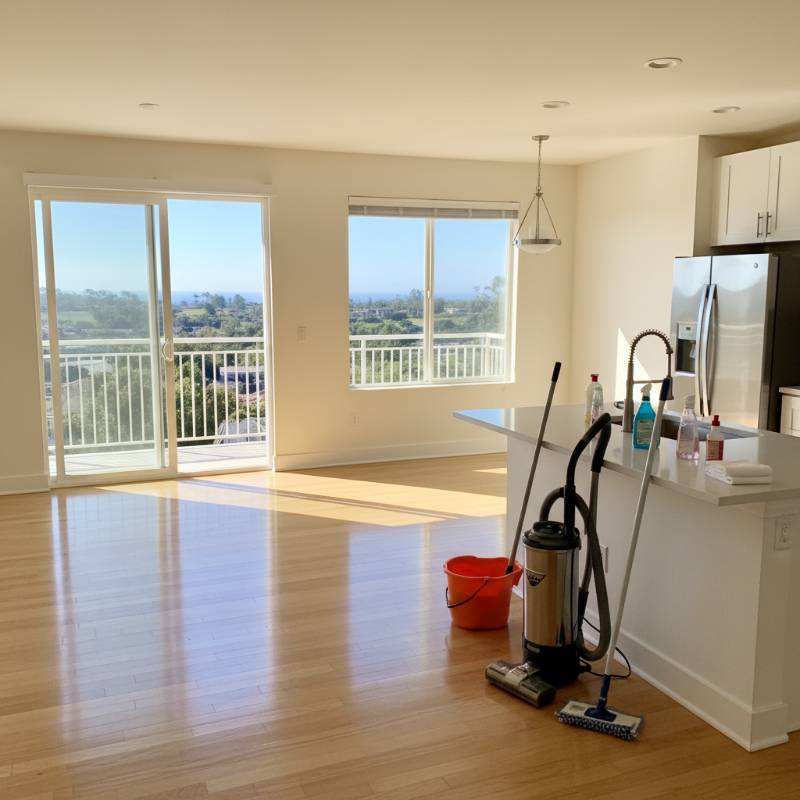
This is also why the order of operations matters. Professional post-renovation cleaning starts with HEPA-filtered vacuuming before any wet mopping takes place. HEPA filters capture 99.97% of particles down to 0.3 microns — the size range where silica and drywall dust live. Mopping first, without vacuuming, turns fine dust into a muddy smear that’s harder to remove and can scratch new surfaces in the process.
Vents and registers get attention too, because they’ve been acting as a collection point for construction particulate throughout the project. Skipping them means the dust problem continues long after the visible surfaces look clean. It’s one of those details that separates a real post-renovation clean from a surface-level wipe-down.
For San Diego County homeowners — particularly in South Bay communities like Chula Vista, National City, and Spring Valley where a lot of mid-century homes are being updated — this matters even more. Renovations on pre-1978 homes can involve lead paint dust on top of standard construction debris, which raises the stakes for thorough, professional cleanup.
What a Construction Deep Clean Actually Covers, Room by Room
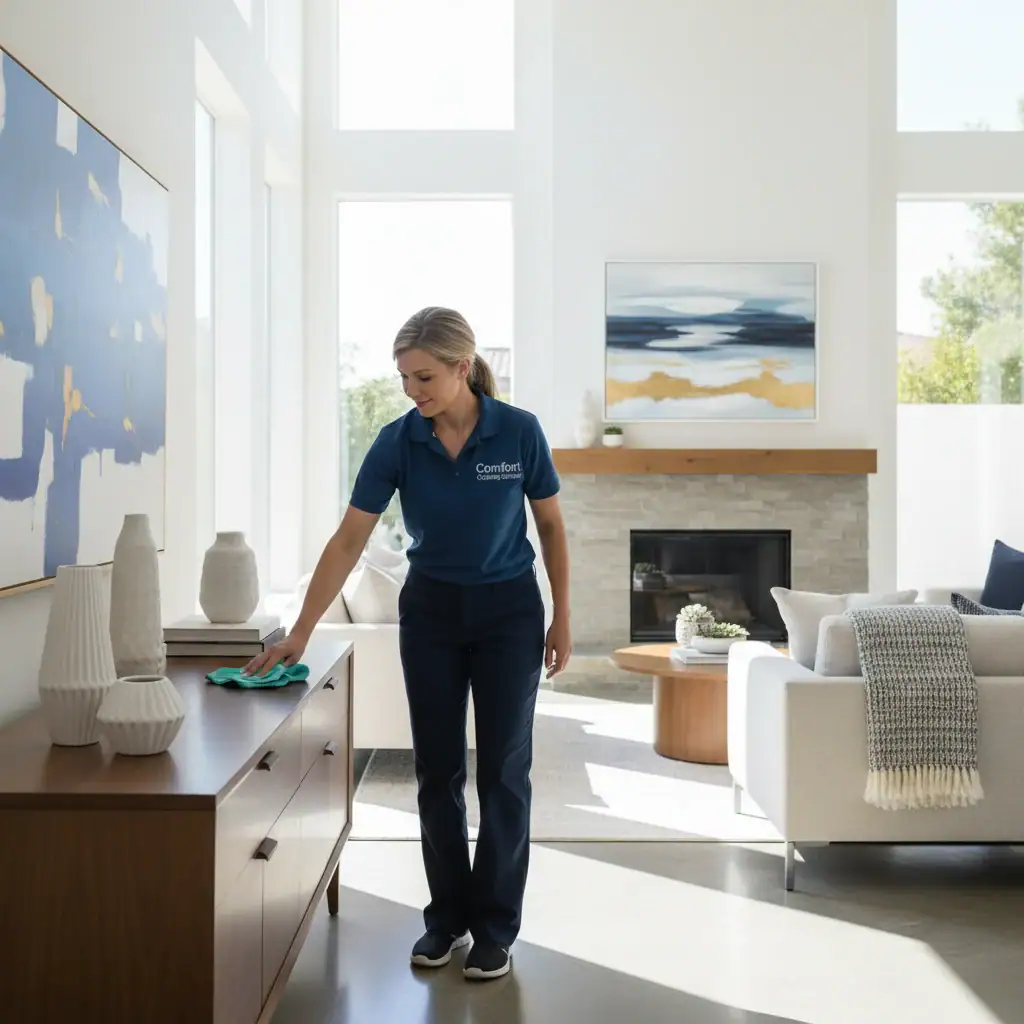
The scope of a post-renovation clean is more comprehensive than most people expect going in. It follows a top-down logic: ceiling fans, light fixtures, and crown molding first, then walls and surfaces, then floors last. That way, anything dislodged from higher up gets caught on the way down rather than redeposited on surfaces you’ve already cleaned.
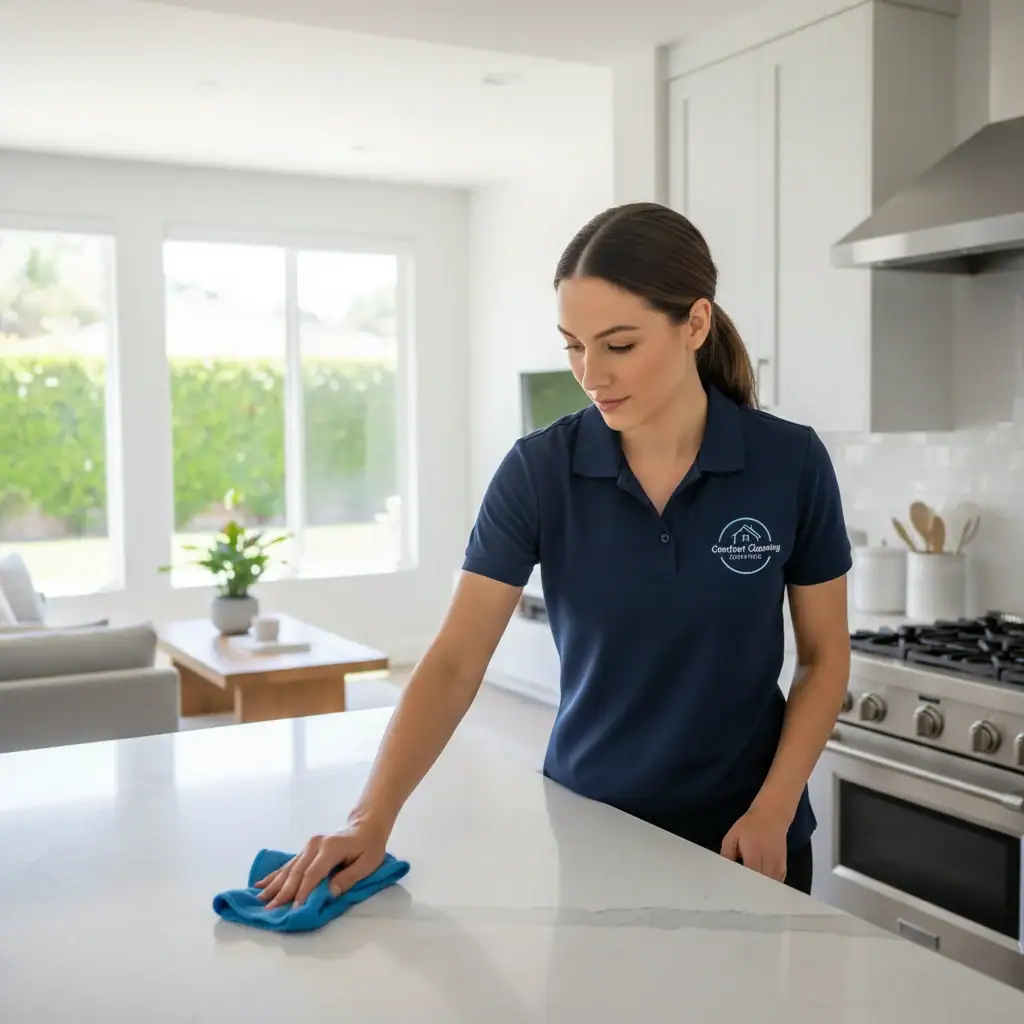
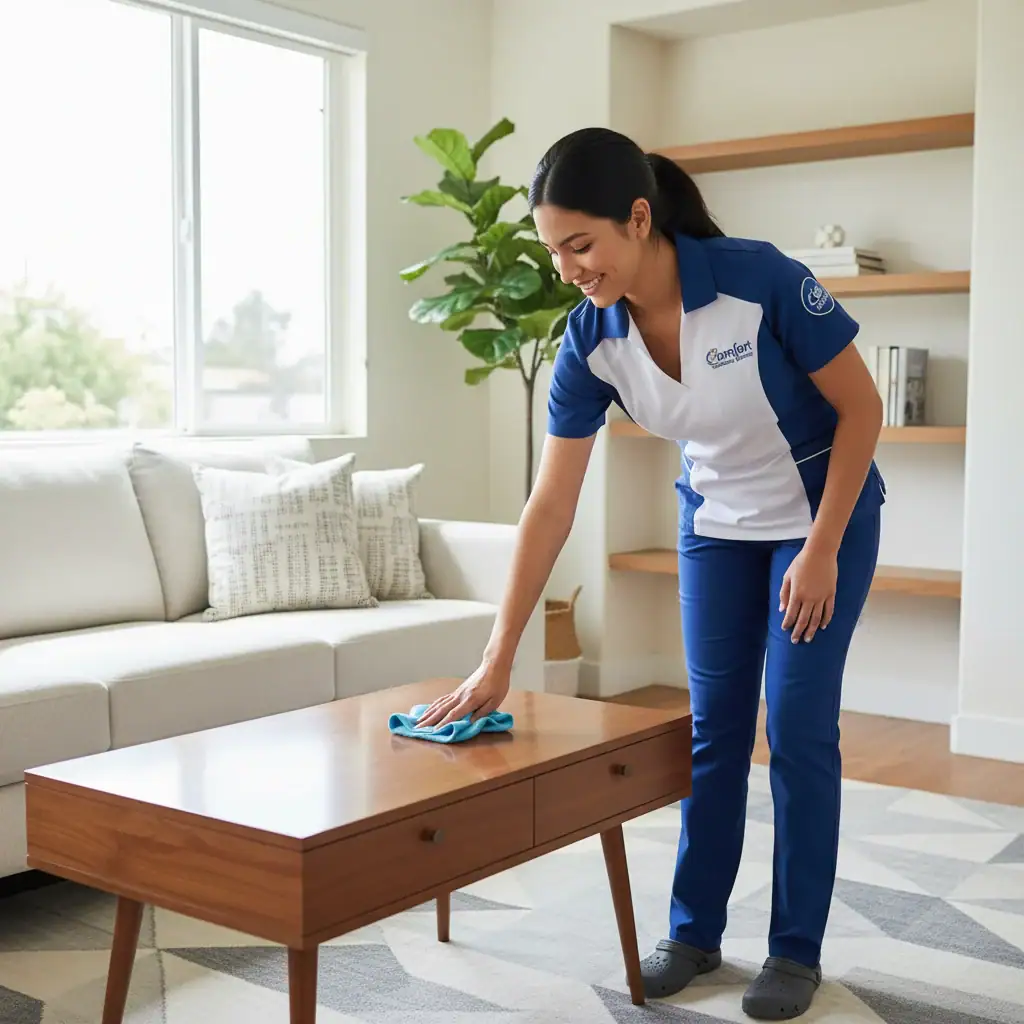
In the kitchen and bathrooms, that means cabinet interiors and exteriors, drawer tracks, hardware, fixtures, and the inside of appliances if they were present during the renovation. In living areas and bedrooms, it means baseboards, door frames, window tracks, sills, and blinds — all the narrow spaces where construction grit loves to hide.
Floors get HEPA-vacuumed before any mopping, and the type of floor determines what products and tools are appropriate. New hardwood, tile, and luxury vinyl all have different tolerances, and using the wrong product on a brand-new surface is an expensive mistake.
Window cleaning is part of the scope too — not just the glass, but the tracks and frames, which tend to collect fine debris that’s easy to miss on a first pass. The same goes for door hinges, switch plates, and outlet covers, which are small details that add up to the difference between “mostly clean” and actually move-in ready.
A full post-renovation clean isn’t a two-hour job. Depending on the size of the home and the scope of the renovation, it can take a full day or longer with a professional team. That’s not a reason to delay — it’s a reason to schedule it before you try to move back in, not after you’ve already been living in the dust for a week.
Professional Cleaning After a Renovation: What to Look For in San Diego County
Not every cleaning company is set up for post-renovation work. It requires commercial-grade HEPA equipment, knowledge of which products are safe on which new surfaces, and a systematic approach that goes beyond what a standard residential clean covers. When you’re evaluating options in San Diego County, a few things are worth asking about before you book.
Insurance matters more here than in a routine cleaning context. After a renovation, you have new finishes — flooring, countertops, cabinetry, fixtures — that represent a significant investment. If something gets damaged during the cleaning, you want to know there’s coverage. A company that’s fully bonded and insured for residential work gives you that protection. Background-checked employees matter too, especially if you’re not planning to be home during the clean.
Why Eco-Friendly Products Matter More After a Renovation Than Any Other Time
Here’s something that doesn’t come up often enough in conversations about post-renovation cleaning: by the time the contractors leave, your home already has an elevated chemical load. Paint, adhesives, sealants, and new flooring materials all off-gas volatile organic compounds — VOCs — for days or weeks after installation. That’s a known part of any renovation.
What doesn’t make sense is adding to that load with harsh chemical cleaners during the post-renovation clean. If the goal is to make the space safe for your family to move back into, the cleaning products used in that process should be part of the solution, not another source of exposure.
This is one of the reasons we use only non-toxic, biodegradable, eco-friendly products at Comforts Cleaning Services — and it’s particularly relevant in the post-renovation context. For families with kids, pets, or anyone with respiratory sensitivities or allergies, this isn’t a nice-to-have. It’s the whole point. You’ve just gone through a renovation to improve your home. The cleaning that follows should leave it genuinely healthier, not just visually cleaner.
San Diego County has one of the most environmentally conscious consumer bases in California, and we’ve found that this resonates strongly with homeowners across the county — from Coronado and La Jolla to El Cajon and Carlsbad. The ask is simple: the products going into your newly renovated home should be safe for the people and animals living there. That’s the standard we hold ourselves to on every job.
It also helps that eco-friendly doesn’t mean less effective. The right non-toxic formulations, paired with professional equipment and proper technique, get the job done without leaving behind chemical residue on new surfaces or in the air.
Professional Cleaners After a Renovation: Questions San Diego County Homeowners Ask
**Do contractors clean up after themselves?** Contractors typically do a rough sweep before they leave — they’ll remove their tools, scrap materials, and large debris. That’s it. The detailed cleaning that makes a space actually livable is a separate job, and it’s not part of what most contractors include. The gap between “contractor broom-swept” and “move-in ready” is exactly where post-renovation cleaning fits.
**Can I just do this myself?** You can try, but most homeowners who attempt it run into the same wall: their household vacuum isn’t equipped for the job. Standard vacuums lack HEPA filtration, which means they pull fine drywall and silica dust into the air instead of capturing it. You end up redistributing the problem rather than solving it. Add in the time it takes to do it thoroughly — top-down, room by room, vents included — and most people find that professional cleaning is worth it.
**How long does post-renovation cleaning take?** It depends on the size of the home and the scope of the renovation. A targeted kitchen or bathroom renovation clean takes less time than a whole-home project. In San Diego County, where ADU construction has surged thanks to California’s permitting changes, we’re seeing a lot of garage conversions and backyard cottages that need a thorough post-construction clean before they’re ready for occupancy or rental. A professional team working efficiently can typically complete a standard renovation clean in a full day, sometimes less.
**How much does post-renovation cleaning cost?** Our post-renovation cleaning starts at $55 per hour per cleaner, with a 3-hour minimum. The total depends on the size of the space and what’s involved. Nationally, post-construction cleaning averages around $477 for a typical residential project, and our pricing comes in $10–$15 per hour less than most major competitors in the San Diego County area. We’re upfront about what we charge because we think you should know what you’re getting into before you commit.
**Is it safe to be home during the cleaning?** It’s generally fine, but most clients prefer to be out of the house during a post-renovation clean. There’s a lot of movement, equipment running, and surfaces being accessed throughout. If you have young children or pets, giving the team space to work without navigating around them makes the job go faster and more smoothly.
Ready to Get Your San Diego County Home Move-In Ready After a Renovation?
A renovation changes your home. The cleanup that follows should protect that investment — not just make it look cleaner, but make it genuinely safe and livable again. That means the right equipment, the right products, and a team that knows what they’re doing with new surfaces and construction-specific mess.
We’ve been doing this work in San Diego County for over ten years, and we bring more than 20 years of combined industry experience to every job. We’re fully bonded and insured, we use only non-toxic eco-friendly products, and we back every cleaning with a satisfaction guarantee — if something wasn’t done to your expectations, we’ll return within 24 hours to make it right.
If your renovation is wrapping up and you’re ready to get back into your home, reach out to Comforts Cleaning Services. We can usually get you on the schedule within a week.