You just finished a renovation. Maybe it was a kitchen remodel in Eastlake, a bathroom gut in Coronado, or a full office build-out in National City. The contractors are gone, the finishes look great — and somehow there’s a fine white film on absolutely everything.
That’s construction dust. And it doesn’t go away with a regular wipe-down.
Post-construction cleaning is its own discipline, with its own techniques, equipment, and sequence. If you’ve never hired for it before, this guide explains exactly how it works — and why the order of operations matters more than most people expect.
What Is Post-Construction Cleaning — and Why It’s Different from a Deep Clean
A standard deep clean tackles built-up grime in a lived-in space. Post-construction cleaning is a different animal entirely. You’re dealing with drywall dust, paint overspray, adhesive residue, construction debris, and particulates that have settled into every surface — including inside cabinets, inside HVAC vents, and behind freshly installed fixtures.
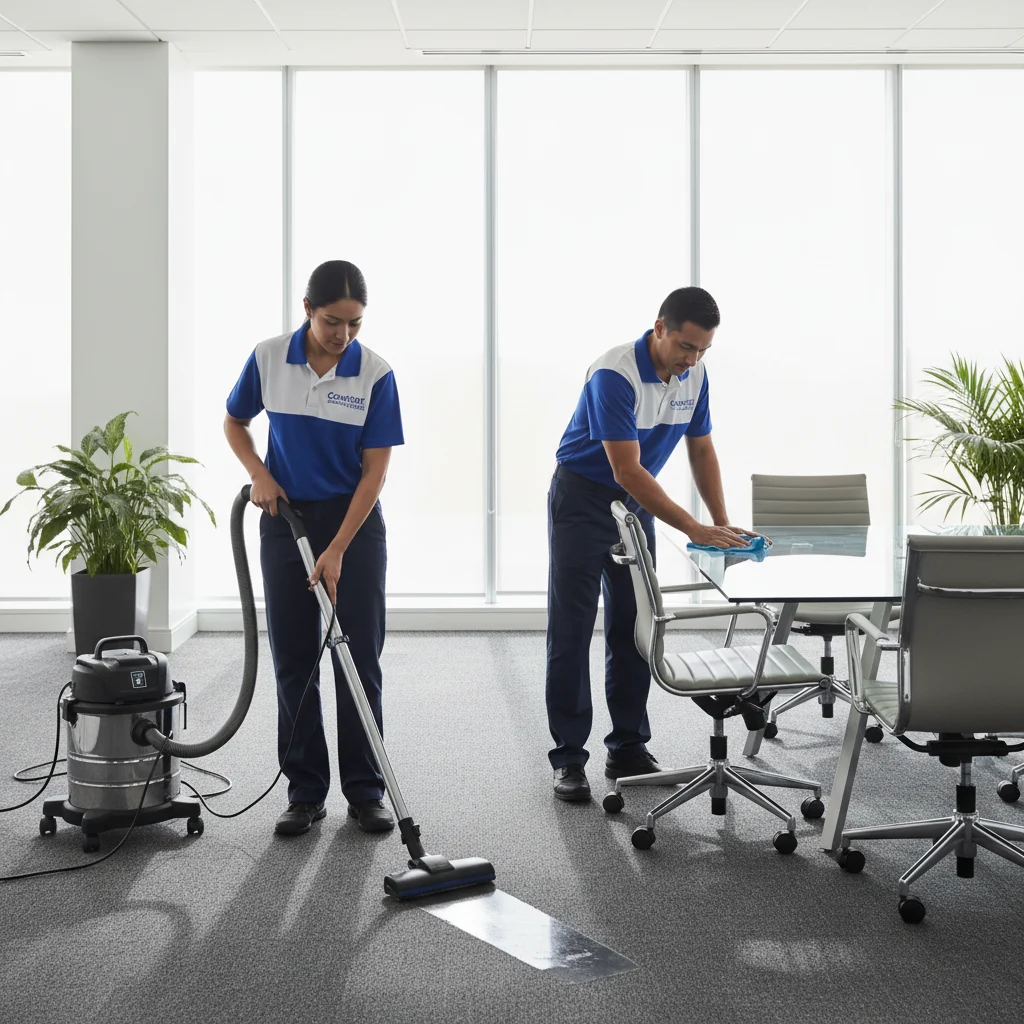
The equipment separates it too. Standard household vacuums and even most shop vacs recirculate fine construction dust back into the air rather than capturing it. Professional post-construction cleaning requires HEPA-filter vacuums — equipment rated to capture particles as small as 0.3 microns, which includes the silica and drywall dust that’s invisible to the naked eye but genuinely harmful when inhaled.
The cleaning sequence matters as much as the equipment. We work top-down — ceiling to floor — so that dust dislodged from upper surfaces doesn’t re-contaminate areas that have already been cleaned. It sounds obvious, but it’s the kind of discipline that separates a crew that knows post-construction work from one that’s figuring it out on your job.
Phase 1: Rough Clean — What Happens Before the Final Fixtures Go In
The rough clean happens early — typically after the major structural work (framing, drywall, plumbing rough-in, electrical rough-in) is complete but before final fixtures, cabinetry, or flooring are installed. At this stage, the goal isn’t a pristine finish. It’s clearing the site of bulk debris so that finish work can proceed without contamination.
This phase includes removing large construction waste, sweeping and vacuuming construction dust from floors and surfaces, and clearing debris from window tracks, door frames, and rough openings. It’s primarily about making the space safe and workable for the next round of contractors — the flooring installers, cabinet makers, painters, and finish carpenters coming in behind the structural crew.
For commercial projects — like the new mixed-use developments going up along the Chula Vista Bayfront or the office build-outs happening throughout downtown San Diego — the rough clean is often a contractual milestone. General contractors need the site cleared before specialty subcontractors will step foot in the space. This is where a professional cleaning crew that understands job site protocols makes a real difference. Showing up on time, following site access procedures, and getting out of the way without creating new problems for the next trade — that’s what contractors are actually evaluating when they hire a cleaning company.
For residential renovations in San Diego County, the rough clean is often skipped entirely because the homeowner isn’t thinking in phases — they just want it clean when it’s done. That’s understandable, but it’s worth knowing that skipping the rough clean can make the final clean significantly harder and more expensive, because dust that’s been walked through and tracked around during finish work is much more labor-intensive to remove than dust that was captured before it spread.
Phase 2 and Phase 3: Light Clean and Final Clean — Getting to Move-In Ready
After finish work is complete — flooring is down, cabinetry is installed, fixtures are in, painting is done — the light clean begins. This phase focuses on removing the dust and residue left behind by the finish trades. Window cleaning, wiping down surfaces, cleaning inside cabinets and drawers, removing stickers and labels from new fixtures and appliances, and addressing paint overspray on windows and hardware. The space is starting to look like itself, but it’s not ready for occupancy yet.
The final clean is the phase most people picture when they hear “post-construction cleaning.” This is the detailed, top-to-bottom pass that makes the space genuinely move-in ready. Floors are cleaned and polished with products appropriate for the specific finish — hardwood, tile, stone, and luxury vinyl each require different care. HVAC vents are cleaned and filters are replaced, because construction dust that’s been pulled into the ductwork will keep recirculating until the filter is swapped out. Every surface is wiped, every window is polished, every fixture is cleaned and inspected.
For a standard 2,000-square-foot home, this typically takes a team of three to four cleaners working six to ten hours. Larger commercial spaces — or projects with significant drywall work — can take longer, sometimes spanning multiple days across phases. Timing matters too: it’s worth waiting 24 to 48 hours after the last tool leaves the site before scheduling the final clean, because that buffer lets airborne dust settle so the crew can capture it in a single pass rather than chasing particles that are still suspended.
One thing that often surprises homeowners: the final clean isn’t just about what you can see. Inside cabinets, inside drawers, the tops of door frames, the inside of light fixtures, the tracks on sliding doors — these are the areas that separate a thorough post-construction clean from one that just looks good on the surface.
Why San Diego County Renovations Have Their Own Set of Challenges
San Diego County’s mild climate is great for year-round construction — but it creates some specific cleaning considerations that aren’t as relevant in other markets. Coastal properties from Coronado to Encinitas deal with salt air residue that builds up on windows and fixtures during construction, requiring extra attention during the final clean to get glass and hardware truly clear.
The county’s year-round building activity also means there’s no slow season for post-construction cleaning demand. Otay Ranch, Eastlake, Rolling Hills Ranch, and National City are all seeing significant residential and commercial construction right now, and the timeline pressure on those projects is real. Contractors need spaces cleaned on schedule, and homeowners want to move back in without delay. We understand these timelines because we work in them every week across San Diego County.
Construction Dust and Air Quality: The Health Case for Professional Post-Renovation Cleaning
This is the part most cleaning guides skip over, but it’s arguably the most important reason to hire a professional crew rather than attempting a DIY cleanup.
Drywall dust contains respirable crystalline silica — fine particles that, when inhaled, can cause respiratory irritation and long-term lung damage with repeated exposure. California’s Cal/OSHA regulations (8 CCR 1532.3) specifically address silica exposure on commercial construction sites, and for good reason. Even on residential renovations, the dust from a single drywall installation or skim coat project can linger in the air and on surfaces for weeks if it’s not captured properly.
For families moving back into a renovated home — especially those with children, pets, or anyone with allergies or asthma — this isn’t a minor detail. The cleaning products used in the space matter too. We use only eco-friendly, non-toxic, biodegradable cleaning products on every job. Not because it’s a marketing angle, but because we’re cleaning spaces where people are going to live, sleep, and breathe — and that requires products that are actually safe, not just effective.
San Diego County’s eco-conscious culture aligns with this approach, and California’s strict VOC (volatile organic compound) regulations from the California Air Resources Board reflect it at a policy level. When you hire a cleaning crew for a post-renovation job, it’s worth asking specifically what products they use and whether they’re safe for children and pets. The answer will tell you a lot about how seriously they take the work.
HVAC systems are another health consideration that’s often overlooked. Construction dust pulled into ductwork during a renovation can recirculate through the entire space long after the cleaning is done, unless the vents are cleaned and the filter is replaced as part of the final clean. We include this as a standard step — not an add-on — because leaving it out defeats the purpose of everything else.
What to Look for When Hiring a Post-Construction Cleaning Company in San Diego County
Not every cleaning company is set up to handle post-construction work, and the difference shows up quickly when you’re evaluating results. Here’s what actually matters when you’re choosing who to hire.
Equipment is the first filter. Ask whether they use true HEPA-filter vacuums — not “HEPA-style” equipment, but vacuums rated to capture 0.3-micron particles. Companies that use standard shop vacs or household vacuums on post-construction jobs are spreading fine dust rather than removing it.
Bonding and insurance are non-negotiable. Post-construction sites have new, expensive finishes — hardwood floors, quartz countertops, custom tile, high-end fixtures. If something gets damaged during cleaning, you want to know the company is fully bonded and insured to cover it. We are, for both residential and commercial work, and we’re happy to confirm that before we book.
Background checks matter more than most people think about upfront. You’re inviting a crew into a space that may not be fully secured yet, often before you’ve moved in or while a commercial build-out is still in progress. Every member of our team has been background-checked.
Ask about quality control. Many cleaning companies send a crew and check in only after the fact. We do supervisor check-ins during the cleaning itself, so if something’s been missed or needs a second pass, it gets addressed before the crew leaves — not after you’ve done a walkthrough and found problems.
And finally, ask about their guarantee. We offer a 24-hour satisfaction guarantee: if something isn’t right, we come back and correct it at no additional charge. That’s a concrete promise, not a vague commitment to your satisfaction.
For commercial clients — general contractors, developers, property managers — we also offer after-hours scheduling so the cleaning doesn’t interrupt ongoing operations or delay your project timeline. We serve the full San Diego County, from Chula Vista and National City to La Jolla, El Cajon, Santee, Carlsbad, and Oceanside, and we can typically book within a week.
Ready to Schedule Post-Construction Cleaning in San Diego County?
Post-construction cleaning done right is a structured process — three phases, the right equipment, the right sequence, and products that are safe for the space and the people who’ll occupy it. Done wrong, it looks clean on the surface but leaves dust recirculating through your HVAC and residue on finishes that took months to install.
If you’re wrapping up a renovation in San Diego County — residential or commercial, a single bathroom or a full building — and you want a crew that actually knows the difference between a deep clean and a post-construction clean, we’d like to help.
Reach out to Comforts Cleaning Services to get a quote. We’ll ask a few straightforward questions about the scope, give you honest pricing, and get you on the schedule.