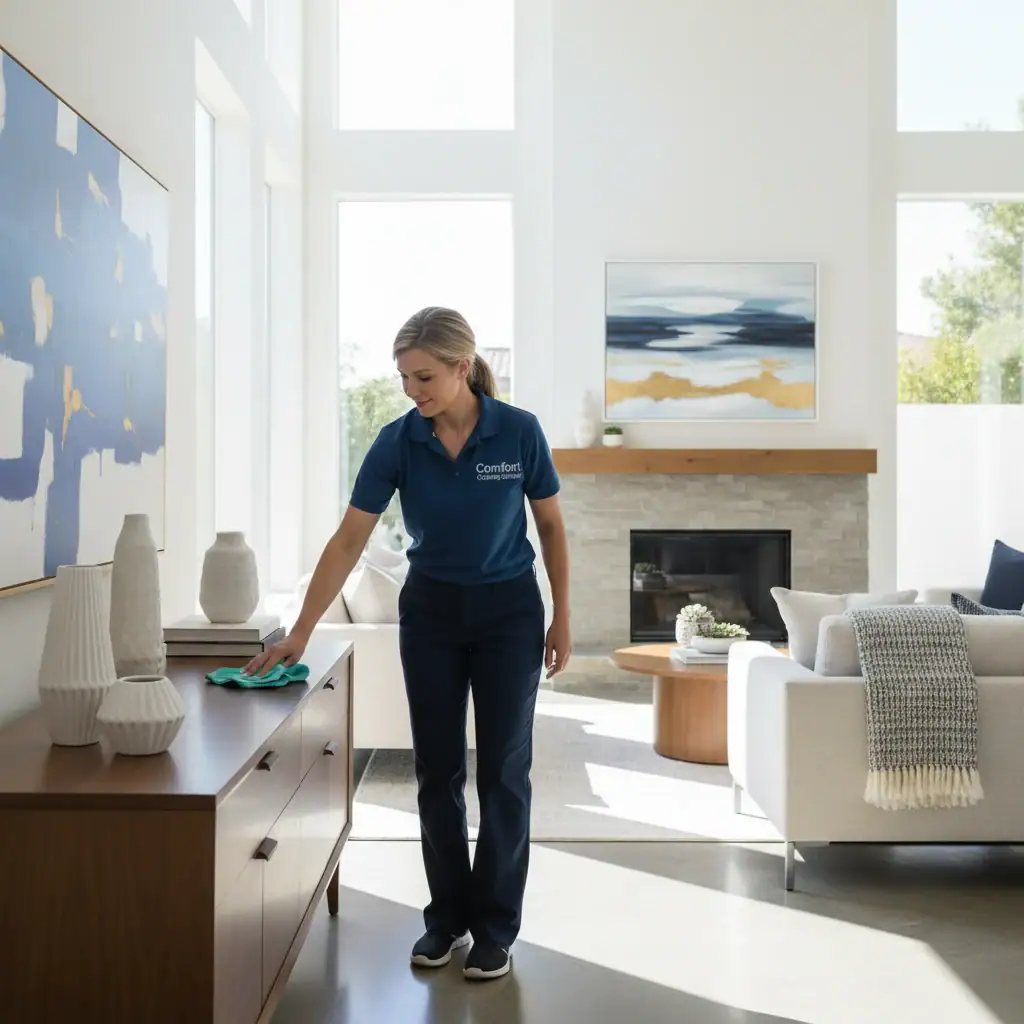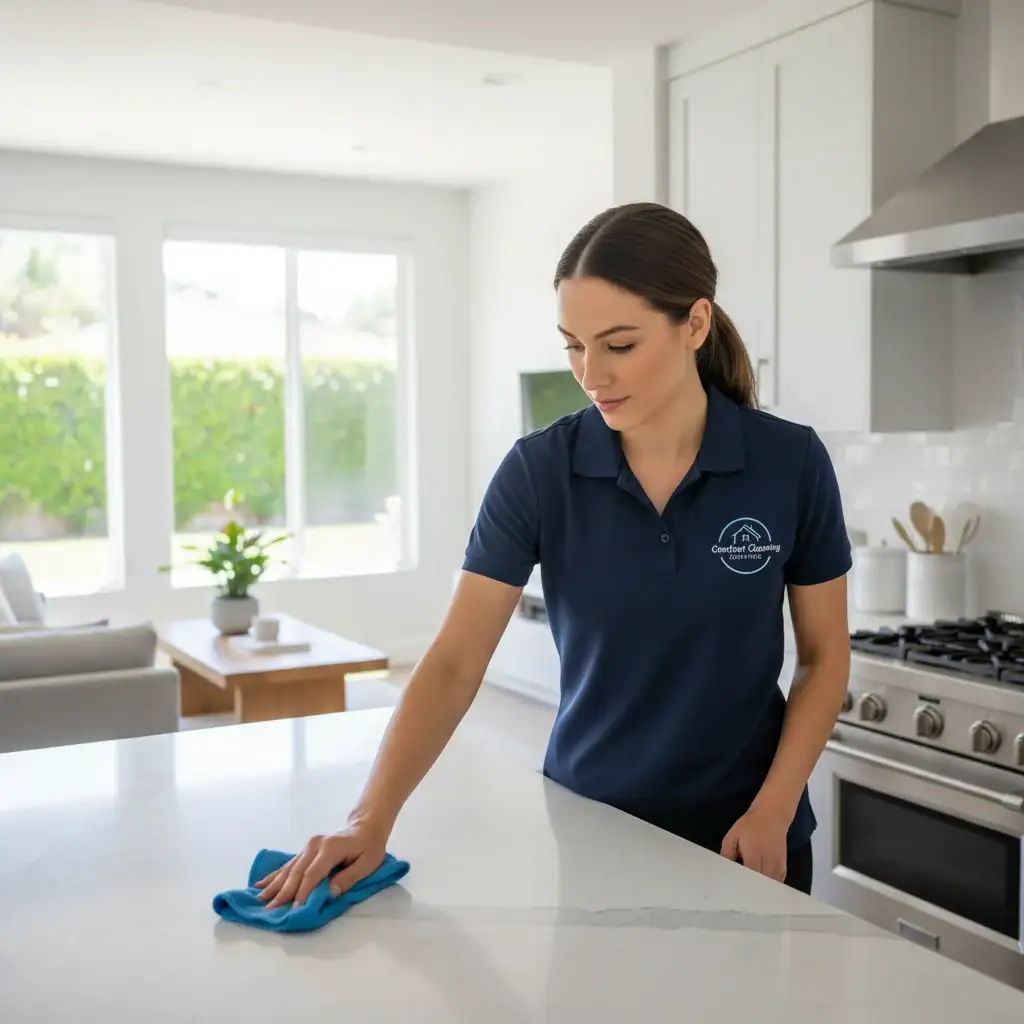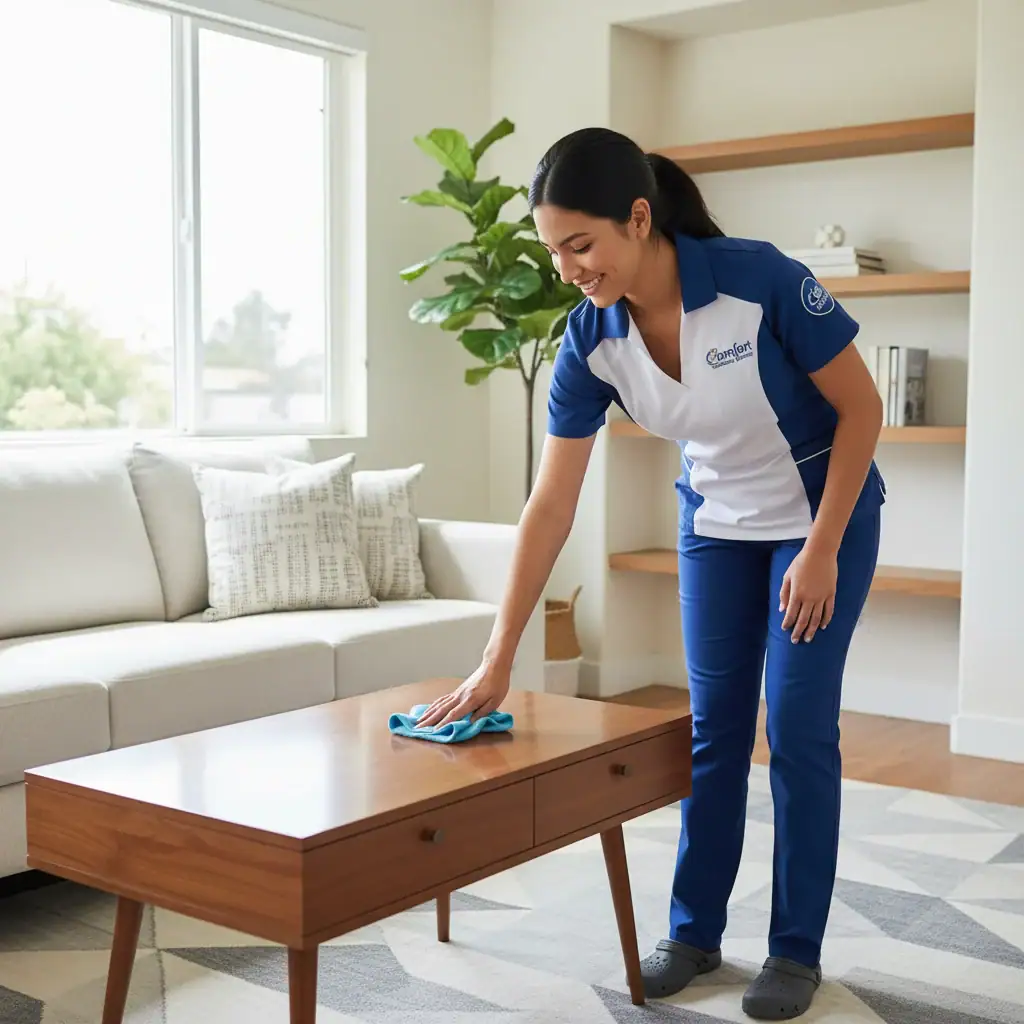

You just finished a renovation. The crew is gone, the new floors look great, and you’re ready to get your home back. Then you wipe down the counters — and two hours later, there’s a thin white film coating everything again.
That’s not bad luck. That’s construction dust behaving exactly the way it’s designed to. And the reason your usual cleaning routine can’t keep up with it isn’t effort — it’s the wrong tools for the job.
Here’s what’s actually happening inside your San Diego County home after construction, why standard cleaning methods fall short, and what it actually takes to get the space clean enough to live in comfortably.
Deep Cleaning After Construction Is a Different Process Entirely
Most people assume post-construction cleanup is just a more intense version of their regular routine. Sweep more. Mop twice. Maybe wipe down the baseboards. But the mess left behind after a remodel doesn’t behave like ordinary household dirt — and treating it that way is exactly what keeps the dust coming back.
Construction dust is made up of extremely fine particles — often 2.5 microns or smaller. That’s small enough to stay suspended in the air for hours and to bypass your body’s natural respiratory defenses entirely. It settles on every surface in the home, not just the rooms that were worked on. It gets pulled through HVAC systems and redistributed into rooms that were never touched by a single contractor. And it can take 48 to 72 hours to fully settle, which means one cleaning pass often isn’t enough.
The scope alone is different. A kitchen remodel doesn’t just leave a mess in the kitchen. It leaves drywall dust on window sills in the bedroom, grit inside cabinet drawers in the hallway, and a fine coating on every light fixture in the house. That’s the reality most homeowners don’t see coming.
Construction Dust Clean Up: Why the Wrong Tools Make It Worse
Here’s the part that surprises most people: a standard household vacuum can actually make post-construction cleanup worse. Most vacuums aren’t equipped with HEPA filtration, which means they pull in fine construction dust and push a significant portion of it right back out through the exhaust. You’re not removing the dust — you’re cycling it through the air and letting it resettle somewhere else.
The same problem applies to dry sweeping. A broom stirs fine particles into the air rather than capturing them. They float, circulate, and come back down. An hour later, the room looks just as dusty as when you started.
Mopping has its own trap. Drywall dust mixed with water doesn’t rinse away cleanly — it turns into a paste that smears across hard floors and dries into a hazy film. If you’ve ever mopped after construction and been left with a chalky residue you couldn’t quite get rid of, that’s why.
Professional post-construction cleaning uses HEPA-filtered vacuums that trap particles down to 0.3 microns, microfiber cloths that capture rather than redistribute dust, and a top-to-bottom sequence that accounts for resettlement. Surfaces get cleaned in the right order so that dust knocked loose from upper areas doesn’t land on surfaces that were already cleaned. It’s a systematic process — not just more effort applied to the same approach.
Beyond the floors and surfaces, there are areas that standard cleaning routinely misses: HVAC vents and returns, window tracks, the interiors of cabinets and drawers, light fixtures, and the tops of door frames. These are exactly the places construction dust migrates to and hides in. Skip them, and you’ll be dealing with that film on your counters for weeks.
There’s also the matter of what’s in the dust itself. Silica particles — released during drywall work, tile cutting, and concrete grinding — are a recognized health hazard. NIOSH has found that workers sanding drywall joint compound can be exposed to silica at concentrations ten times the OSHA permissible limit. That doesn’t disappear when the crew leaves. It settles into your home and gets reintroduced into the air every time someone walks through the room or the HVAC kicks on. For families with kids, pets, or anyone with asthma or allergies, that’s not a minor inconvenience — it’s a real health concern.
Why San Diego County Homes Have It Harder Than Most
If you’re in San Diego County and you’ve just finished a renovation, there are a few local factors that make post-construction dust cleanup more challenging than it would be in other parts of the country — and most homeowners don’t realize any of them.
San Diego County’s climate is semi-arid with low humidity for most of the year. In humid environments, fine dust particles tend to absorb moisture, clump together, and fall relatively quickly. In dry conditions, those same particles stay lighter, stay airborne longer, and travel farther before they settle. That’s part of why San Diego County homeowners often notice construction dust showing up in rooms nowhere near the work area. The air here simply keeps particles in circulation longer.
Then there are Santa Ana wind events. These aren’t just a fall phenomenon — they can occur year-round, and when they hit during or after construction, they drive additional particulates into the home from outside, compounding the indoor dust load significantly. If your renovation happened to coincide with a Santa Ana event, you may be dealing with more than just what the contractors left behind.
For homeowners along the coast — in Coronado, La Jolla, Pacific Beach, Del Mar, or Carlsbad — there’s another layer. Salt air and marine layer moisture cause construction dust to bond more stubbornly to windows, fixtures, and new surfaces. What wipes off easily in an inland San Diego County home can require more deliberate cleaning technique on the coast.
And then there’s the ADU factor. San Diego County has seen a significant wave of accessory dwelling unit construction over the past several years — garage conversions, backyard cottages, attached units — driven by California’s ADU-friendly legislation. Chula Vista, El Cajon, Escondido, and Santee have all seen substantial ADU activity. Every one of those projects ends with a construction mess that needs to be addressed before the unit is livable or rentable. It’s one of the most common scenarios we see, and it’s one where the scope of cleanup is often underestimated.
What Post-Construction Cleaning Actually Looks Like When It’s Done Right
A proper post-construction clean isn’t a single sweep-through. It’s a deliberate, multi-phase process that accounts for the way construction dust behaves — including the fact that some of it won’t have fully settled yet when the crew first arrives.
The work starts at the top and moves down: ceilings, light fixtures, ceiling fans, and upper wall surfaces before anything at floor level is touched. HVAC vents and returns get addressed early, because any dust disturbed during cleaning will circulate through the system if the vents aren’t handled. Cabinets and drawers get wiped out, not just wiped down. Window tracks, door frames, and baseboards get specific attention — these are collection points that standard cleaning almost always skips.
Then floors. HEPA vacuuming before any wet mopping. The right cleaning solution for the specific floor type — what works on tile can streak new hardwood, and new flooring is particularly vulnerable to improper technique in the days right after installation.
What’s Included in a Professional Post-Construction Clean
The scope of a professional post-construction clean goes considerably further than most homeowners expect when they first start thinking about it. It’s not just the obvious stuff — the visible debris and the dusty countertops. It’s everything that construction activity touches, directly or indirectly.
That means walls and baseboards, which collect fine dust and can show paint transfer or scuff marks from the work. It means window sills and window tracks, which trap construction grit and are rarely addressed in a standard cleaning. It means the interiors of kitchen and bathroom cabinets, which get coated in fine particles even when the doors are closed during work. Light fixtures, ceiling fans, vents, and returns. Bathroom fixtures and hardware that may have paint overspray or adhesive residue. New flooring that needs to be cleaned in a way that protects the finish rather than damaging it.
For larger renovation projects — a full kitchen remodel, a bathroom gut-and-rebuild, or an ADU conversion — we typically spend eight to twelve hours on a full-size home. That’s not padding. That’s what it actually takes to do the job right when the entire home has been affected by construction activity. Rushing that process is how areas get missed and how homeowners end up calling back a week later because the dust never really went away.
One thing worth knowing: because construction dust continues to settle for 48 to 72 hours after work is completed, some areas may need a second pass. That’s not a failure of the first clean — it’s just the physics of fine particulate matter. We’re upfront about this rather than promising a single visit solves everything.
We use only eco-friendly, non-toxic products on every job, which matters more in a post-construction context than people often realize. New construction materials — paint, adhesives, flooring — already introduce VOCs and chemical residues into the home environment. Layering harsh chemical cleaning products on top of that isn’t doing your family any favors. Our products are safe for kids and pets from the moment we’re done, which means you’re not waiting out another off-gassing window before you can actually use your space.
What to Look for When Hiring a Post-Construction Cleaning Company in San Diego County
Not every cleaning company is equipped to handle post-construction work — and the gap between a company that understands it and one that doesn’t shows up pretty quickly once you’re back in your home and still finding dust in places it shouldn’t be.
The first thing to check is whether the company is fully bonded and insured. This matters more after a renovation than at any other time, because your home is full of new finishes, new flooring, new fixtures, and new appliances — all of which are vulnerable to damage during cleaning. A company that isn’t insured leaves you with no recourse if something goes wrong. It’s a non-negotiable.
Ask whether they use HEPA-filtered vacuums. If a company can’t answer that question clearly, that tells you something about how specifically they’ve thought about post-construction work versus standard cleaning. The equipment difference isn’t minor — it’s the difference between actually removing fine particles and just moving them around.
Look at their reviews, and specifically look for mentions of renovation or construction cleaning — not just general praise. A company with a strong track record of post-construction work will have customers who mention it. Generic five-star reviews for routine cleaning don’t tell you much about how they’ll handle drywall dust and adhesive residue.
Pricing transparency matters too. Post-construction cleaning is a variable-scope job, and any company worth hiring should be willing to explain how they price it. We charge $55 per hour per cleaner with a three-hour minimum for one-time and first-time cleans. That’s a starting point — final cost depends on the size of the home and the scope of the renovation — but at least you know what you’re working with going in. We also back every job with a 24-hour satisfaction guarantee: if something was missed, we come back and address it at no additional cost.
We’re based in Chula Vista and serve San Diego County broadly — from Coronado and La Jolla to El Cajon, Carlsbad, and North Park. We’re familiar with the range of home types across the county, the coastal cleaning challenges, and the specific demands that come with the ADU construction wave that’s been running through the South Bay and East County for the past several years. This isn’t a market we’re learning on the fly.
Ready to Get Your Home Back After Construction?
Post-construction cleaning is one of those jobs that looks straightforward until you’re in it. The dust keeps coming back, the scope is bigger than expected, and the standard approach just doesn’t cut it when you’re dealing with fine particulate matter that’s settled into every corner of the house.
The good news is that it’s a solvable problem — it just requires the right process, the right equipment, and someone who actually understands what they’re dealing with.
If you’ve just wrapped a renovation anywhere in San Diego County and you’re ready to stop fighting the dust yourself, Comforts Cleaning Services is worth a conversation. We’re local, we’re fully insured, and we know what post-construction cleaning actually takes.