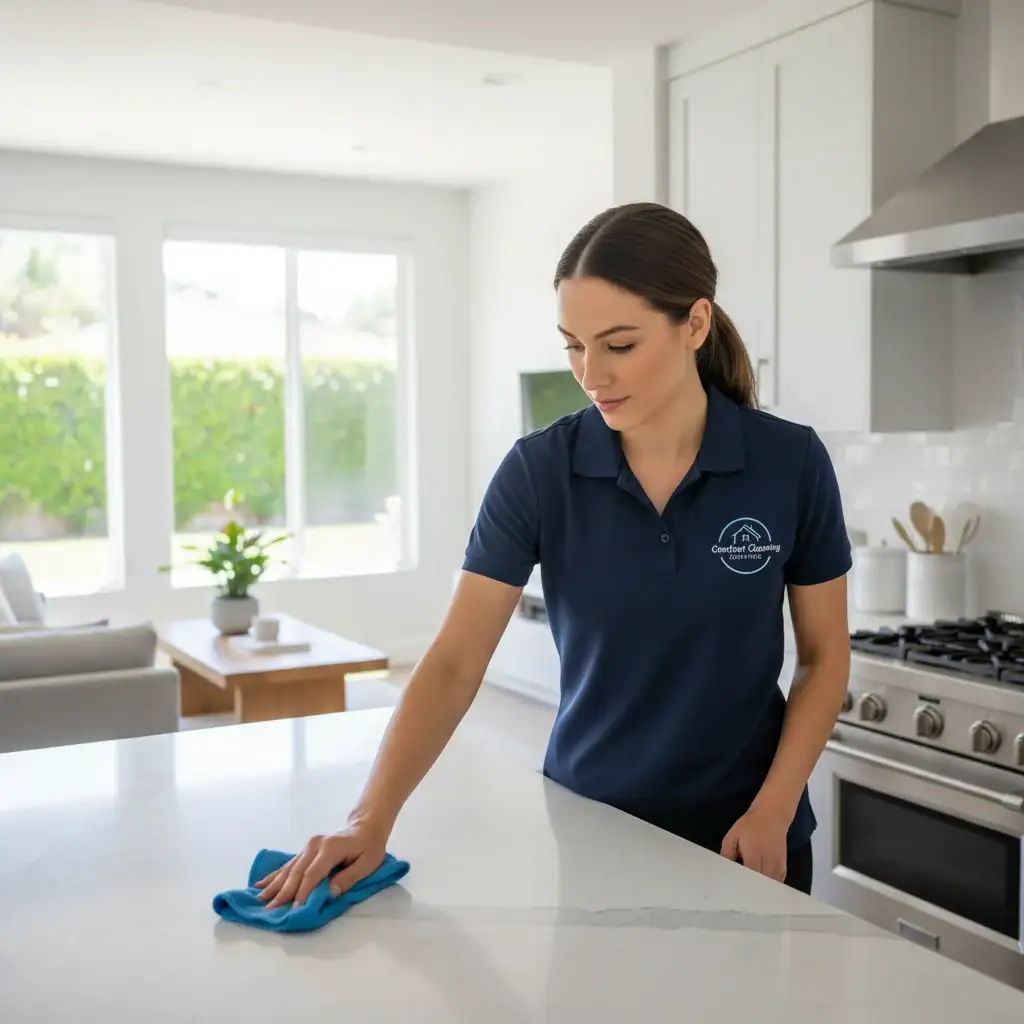

Every cleaning company in San Diego County says they’re bonded and insured. It’s on their website, their Google listing, their Yelp page. But here’s the thing — most people who read it have no idea what it actually means. And most companies that say it never explain it.
That’s a problem, because the difference between a company that’s genuinely covered and one that just uses the phrase can cost you thousands of dollars if something goes wrong. We’ve walked through what bonded and insured actually means, what California law requires, and exactly what to verify before you book — so you’re not finding out the hard way.
What a Licensed and Insured Cleaning Service Actually Covers
When a cleaning company says they’re licensed, bonded, and insured, they’re describing three separate things — and each one protects you in a different way. A business license just means they’re legally registered to operate. Insurance covers physical damage and injuries. Bonding covers theft and failure to perform. Together, they form a complete protection framework. Separately, any one of them missing leaves a gap.
The problem is that the phrase gets used as a single badge, without anyone explaining what’s underneath it. So when you’re comparing companies across San Diego County — whether you’re in La Jolla, Chula Vista, North Park, or anywhere else in the region — you’re often comparing claims that sound identical but represent very different levels of actual coverage.
Bonded and Insured Cleaning: What Each Term Means
Let’s start with insurance, because it’s the one most people have some intuition about. A reputable cleaning company carries two types: general liability insurance and workers’ compensation insurance. General liability covers physical damage — if a cleaner knocks over a lamp, scratches a hardwood floor, or damages a countertop, the company’s liability policy is what pays for it. Without it, you’d be negotiating directly with whoever broke your thing, with no neutral party involved and no guarantee of resolution.
Workers’ compensation is the one that surprises most homeowners. If a cleaner is injured while working in your home and the company doesn’t carry workers’ comp, California law may hold you — the homeowner — financially responsible. That’s not a hypothetical. It’s a real legal exposure that applies in this state, and it’s one of the most overlooked risks in the industry.
When you hire someone who works for a properly insured company, that liability stays with the employer, not with you. That protection matters whether you’re in a coastal neighborhood or inland across San Diego County.
Bonding is different from insurance, and the distinction matters. A surety bond protects you if the company fails to complete the work, or if a theft occurs. Over 40% of theft claims in the home services industry are traced back to cleaning companies — which sounds alarming, but it’s exactly why bonding exists as a separate layer of protection. If something goes missing and the company is bonded, there’s a formal claims process. If they’re not, you’re left hoping the situation resolves itself through goodwill.
One more thing worth knowing: if a cleaning company uses independent contractors rather than actual employees, the company’s insurance may not fully cover those workers while they’re in your home. Employees of a bonded and insured company are clearly covered. Independent contractors often aren’t — or their coverage is conditional in ways that only become clear after something goes wrong.
How to Verify a Cleaning Company Is Actually Bonded and Insured
Saying it and proving it are two different things. Any company can put “bonded and insured” on their website. What separates a credible company from one just using the language is whether they can hand you a certificate of insurance when you ask for it.
Ask for it. A legitimate company will have no hesitation providing documentation. If a company gets evasive, changes the subject, or tells you to “just trust us,” that’s a red flag worth taking seriously. You’re inviting someone into your home — you’re entitled to know what coverage is in place.
Beyond the certificate, there are a few other things worth checking. California’s Property Service Workers Protection Act requires janitorial employers to register with the state’s Division of Industrial Relations, which includes maintaining specific bond amounts as a condition of registration. This means operating a legitimate cleaning company in California involves more than just saying the right words — there are actual regulatory requirements behind it. That’s part of why the credential carries more weight here than in states with looser oversight.
You can also look at whether the company is BBB accredited, how long they’ve been operating, and whether their reviews reflect consistent reliability over time — not just a handful of five-star ratings from the first month. A company with 100-plus reviews across platforms, consistent themes of reliability and communication, and transparent published pricing is giving you real signals. A company with a clean website and no verifiable track record is giving you a logo and a promise.
In San Diego County, the military community adds another layer to this. Military housing communities enforce property damage liability strictly, and PCS moves happen on tight timelines. If you’re in that situation — or helping a family member navigate one — working with a properly credentialed company isn’t just a preference, it’s a practical necessity.
What to Ask House Cleaning Contractors Before You Book
Most people don’t know what questions to ask when they’re vetting a cleaning company. It’s not something you do every day, and the industry doesn’t exactly make it easy. But there are a few questions that cut through the noise quickly and tell you a lot about who you’re dealing with.
Ask whether the cleaners are employees or independent contractors. Ask to see a certificate of insurance. Ask what happens if something is damaged — not just “are you insured,” but what the actual process looks like. Ask whether background checks are conducted on every team member. The answers will tell you whether you’re talking to a company that’s built for accountability or one that’s built to avoid it.
Spring Cleaning List by Room: When to Call in Professional Help
Spring cleaning is the moment most San Diego County homeowners either take on too much themselves or finally decide it’s worth calling someone. The motivation is real — the follow-through is where it falls apart. If you’re working through a room-by-room reset, here’s a practical way to think about what actually needs attention.
In the kitchen, the surfaces you clean weekly are different from the ones that accumulate over months. Exterior appliances, countertops, and the stovetop are routine. The interior of the oven, the refrigerator coils, the cabinet doors, and the space behind and beneath appliances — those are the things that get skipped all year and then feel overwhelming in April.
Bathrooms need grout attention, fixture descaling, and the kind of scrubbing that’s hard to sustain when you’re also trying to get through the rest of the house. Living areas accumulate dust in places that don’t get touched during weekly tidying — baseboards, ceiling fans, window sills, and the surfaces behind furniture. Bedrooms are often the last priority and the first to get skipped.
In coastal San Diego County neighborhoods — Pacific Beach, Ocean Beach, Coronado, Imperial Beach — salt air and sand create a specific kind of buildup that doesn’t respond to a quick wipe-down. The marine layer humidity works its way into corners and surfaces in ways that accumulate faster than in inland areas. Homes in North Park, with their older bungalow architecture, have more nooks, trim details, and character surfaces that require careful, experienced attention. In drier inland communities like El Cajon, Santee, and Escondido, dust accumulation between cleanings is a constant reality.
The honest answer to “when should I call someone” is: when the list is longer than your weekend. A professional deep clean gets you to a reset point that’s genuinely hard to reach on your own, and a recurring service keeps you from ending up in the same situation next spring.
Why Eco-Friendly Products Are Part of the Trust Conversation
Most conversations about bonded and insured cleaning stop at credentials. But there’s another layer of trust that San Diego County homeowners — especially those with kids and pets — are increasingly asking about: what products are actually being used in their home.
California consumers are among the most aware in the country when it comes to chemical exposure. Proposition 65 has been part of the conversation here for decades, and it’s shaped how people think about what goes on their countertops, floors, and bathroom surfaces. Hiring a company that’s bonded and insured but using harsh conventional chemicals in your home is a partial answer to the trust question.
The full answer includes knowing that the products are non-toxic, biodegradable, and safe for the people and animals who live there. That matters most in homes with young children who spend time on floors, or pets who groom themselves after a cleaning. The global market for household green cleaning products was projected to reach nearly $28 billion by the end of 2024. The demand is real, and it reflects a shift in what homeowners expect from a professional cleaning service.
At Comforts Cleaning Services, we use only eco-friendly, non-toxic, biodegradable products on every job — residential and commercial. We bring all supplies and equipment ourselves, so there’s no guessing about what’s being used in your space. That’s part of what it means to be a cleaning service that’s genuinely accountable, not just credentialed on paper. Being bonded and insured protects your property. Using safe products protects your household. Both matter, and neither should be optional.
We’re also transparent about pricing — starting at $55 per hour per cleaner with a three-hour minimum, and discounted rates for recurring clients — because transparency in how we operate extends to how we charge. No hidden fees, no surprises after the job is done.
How to Choose a Cleaning Service in San Diego County You Can Actually Trust
“Bonded and insured” is the floor, not the ceiling. It’s the baseline that any serious cleaning company in San Diego County should meet — but verifying it, understanding what it covers, and knowing what else to ask are what separate a good hire from a regrettable one.
Ask for documentation. Confirm employees are background-checked. Know what the damage process looks like before you need it. Pay attention to whether the company is transparent about pricing, products, and what happens when something doesn’t go right.
If you’re ready to stop guessing and want a team that can actually back up what we say, Comforts Cleaning Services is a straightforward place to start. We’ve been serving San Diego County homes and businesses for years, and we’re happy to answer any of the questions this post raised before you book a thing.